What is the maximum load capacity of a Travelling Bridge Sludge Scraper? Travelling Bridge Sludge Scraper

As a supplier of Travelling Bridge Sludge Scrapers, I often encounter questions from customers about the maximum load capacity of these essential wastewater treatment devices. Understanding the maximum load capacity is crucial for ensuring the efficient and reliable operation of wastewater treatment plants. In this blog, I will delve into the factors that determine the maximum load capacity of a Travelling Bridge Sludge Scraper, how to calculate it, and the implications for different treatment applications.
Factors Affecting the Maximum Load Capacity
The maximum load capacity of a Travelling Bridge Sludge Scraper is influenced by several key factors. These include the design and construction of the scraper, the characteristics of the sludge, and the operating conditions of the treatment tank.
Design and Construction
The structural integrity of the travelling bridge itself is a fundamental factor. The materials used in its construction, such as high – strength steel, play a vital role in determining how much weight it can support. The bridge needs to be able to withstand the forces exerted by the scraping mechanism, the weight of any attached equipment (such as sludge pumps or electrical components), and the additional load from the accumulated sludge.
The width and length of the bridge also affect its load – bearing capacity. A wider bridge may be required to cover larger tank areas, but it also needs to be designed to handle the increased cross – sectional load. The design of the wheels or tracks that support the travelling motion of the bridge is crucial. Properly sized and well – maintained wheels can distribute the load evenly, reducing stress on the bridge structure.
Sludge Characteristics
The properties of the sludge being scraped have a significant impact on the load capacity. The density of the sludge is a primary consideration. Denser sludge, such as that containing a high proportion of solids, will exert more weight on the scraper blades and the bridge. The viscosity of the sludge also matters. Highly viscous sludge can create more resistance during the scraping process, increasing the load on the drive system of the scraper.
The particle size distribution within the sludge is another factor. Larger particles may require more force to move, potentially overloading the scraper if not accounted for in the design. Additionally, the chemical composition of the sludge can affect its corrosiveness, which over time can weaken the structural components of the scraper and reduce its load capacity.
Operating Conditions
The depth of the treatment tank is an important operating condition factor. Deeper tanks mean that the scraper has to lift the sludge over a greater distance, increasing the load on the scraping mechanism. The flow rate of the wastewater in the tank also plays a role. A high – flow tank may create more turbulence, which can make it more difficult for the scraper to operate efficiently and may add extra stress on the equipment.
The frequency of operation of the Travelling Bridge Sludge Scraper is also relevant. If the scraper is required to operate continuously or at very short intervals, it may experience more wear and tear, potentially reducing its maximum load capacity over time.
Calculating the Maximum Load Capacity
Calculating the maximum load capacity of a Travelling Bridge Sludge Scraper is a complex process that requires considering multiple variables.
Structural Load
The structural load on the bridge is determined by analyzing the weight of all the components attached to it. This includes the weight of the scraping blades, the sludge collection hoppers, any instrumentation or control equipment, and the power supply cables. Engineers use principles of structural mechanics to calculate the stress and strain on different parts of the bridge structure.
For example, we use the following formula to calculate the force on a beam – like structure: (F=\sigma A), where (F) is the force, (\sigma) is the allowable stress of the material, and (A) is the cross – sectional area of the beam. By ensuring that the calculated forces due to the structural load do not exceed the allowable limits of the materials used, we can determine the structural load capacity of the bridge.
Sludge Load
To calculate the sludge load, we need to know the volume and density of the sludge. First, we estimate the volume of sludge that accumulates in the tank during a given period. This can be calculated based on the flow rate of the incoming wastewater, the sedimentation rate of the solids, and the retention time in the tank.
The mass of the sludge ((m)) can then be calculated using the formula (m = \rho V), where (\rho) is the density of the sludge and (V) is the volume. The force exerted by the sludge on the scraper blades is equal to the weight of the sludge, which is (F = mg), where (g) is the acceleration due to gravity ((g = 9.81m/s^{2})).
The total load capacity of the Travelling Bridge Sludge Scraper is the sum of the structural load and the sludge load, taking into account any additional forces due to operating conditions such as fluid drag and wind load.
Implications for Different Treatment Applications
The maximum load capacity of a Travelling Bridge Sludge Scraper has significant implications for different wastewater treatment applications.
Municipal Wastewater Treatment
In municipal wastewater treatment plants, the load on the sludge scraper can vary depending on the population served and the season. During periods of heavy rainfall, the inflow of wastewater may increase significantly, leading to a higher rate of sludge accumulation. A Travelling Bridge Sludge Scraper with an appropriate maximum load capacity is essential to handle these peak loads and maintain the efficiency of the treatment process.
Industrial Wastewater Treatment
Industrial wastewater can have highly variable characteristics. For example, in the food processing industry, the sludge may be rich in organic matter, which can be relatively light but highly viscous. In the mining industry, the sludge may contain heavy metals and large – sized particles, resulting in a high – density and abrasive sludge. An industrial application requires a Travelling Bridge Sludge Scraper with a load capacity that can withstand these unique challenges.
Specialized Treatment Processes
Some specialized treatment processes, such as advanced biological treatment or membrane bioreactors, may produce different types of sludge compared to conventional treatment methods. These processes may require a Travelling Bridge Sludge Scraper with a customized load capacity to ensure the proper removal of the specific sludge types.
Importance of Accurate Load Capacity Assessment
Accurately assessing the maximum load capacity of a Travelling Bridge Sludge Scraper is of utmost importance for several reasons.
Firstly, it ensures the safety of the equipment and the personnel operating in the wastewater treatment plant. Overloading the scraper can lead to structural failures, which may cause damage to the equipment and pose a risk to workers.
Secondly, an appropriately sized scraper improves the efficiency of the treatment process. A scraper that is too small for the load will not be able to remove the sludge effectively, leading to sludge buildup in the tank. This can reduce the treatment capacity of the plant and may result in poor water quality of the treated effluent. On the other hand, a scraper that is oversized may be more expensive to purchase and operate, without providing any significant additional benefits.
Conclusion
In conclusion, the maximum load capacity of a Travelling Bridge Sludge Scraper is determined by a combination of factors including design and construction, sludge characteristics, and operating conditions. Calculating this load capacity involves complex engineering analyses to ensure the reliable and efficient operation of the scraper.
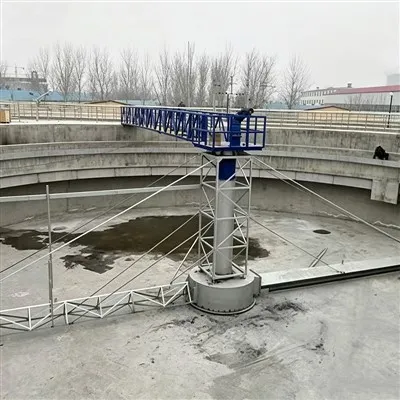
The implications of the load capacity for different treatment applications highlight the importance of selecting the right – sized scraper for each specific project. As a supplier, we are committed to providing our customers with accurate information about the load capacity of our Travelling Bridge Sludge Scrapers and helping them choose the most suitable equipment for their needs.
Industrial Mixing Equipment If you are interested in learning more about our Travelling Bridge Sludge Scrapers or need assistance in determining the appropriate load capacity for your wastewater treatment plant, please feel free to contact us. Our team of experts is ready to discuss your requirements and provide you with customized solutions.
References
- "Wastewater Treatment Engineering" by Metcalf & Eddy
- "Structural Analysis" by R.C. Hibbeler
- Industry standards and guidelines for wastewater treatment equipment design and operation.
Shandong Ningye Machinery Equipment Co., Ltd.
Shandong Ningye Machinery Equipment Co., Ltd. is one of the most reliable travelling bridge sludge scraper manufacturers and suppliers in China. With abundant experience, we warmly welcome you to buy discount travelling bridge sludge scraper made in China here from our factory. Quality products and low price are available.
Address: Workshop No. 16, Dongcao Village Industrial Park, Guangda East Road, Songguantun Subdistrict, Economic and Technical Development Zone, Dezhou City, Shandong Province
E-mail: ningyejixie@163.com
WebSite: https://www.cn-ningye.com/
