In recent years, the field of robotics has witnessed remarkable advancements, with collaborative robots (cobots) emerging as a transformative force in various industries. These robots are designed to work alongside human operators, enhancing productivity, safety, and efficiency in the workplace. As a leading supplier of robot reducer components, I am frequently asked whether our products can be used in collaborative robots. In this blog post, I will explore this question in detail, shedding light on the compatibility, benefits, and considerations of using robot reducer components in cobots. Robot Reducer Components

Understanding Collaborative Robots
Collaborative robots are a new breed of robots that are specifically designed to interact with humans in a shared workspace. Unlike traditional industrial robots, which are typically isolated behind safety cages, cobots are equipped with advanced sensors and safety features that allow them to work safely in close proximity to human operators. These safety features include force sensors, torque sensors, and vision systems, which enable cobots to detect and respond to human presence and movements in real-time.
Cobots are used in a wide range of applications, including assembly, pick and place, packaging, and quality inspection. They are particularly well-suited for tasks that require a high degree of precision, flexibility, and adaptability. For example, cobots can be easily programmed to perform repetitive tasks with high accuracy, while also being able to adapt to changes in the production environment or product requirements.
The Role of Robot Reducer Components
Robot reducer components play a crucial role in the operation of collaborative robots. A reducer is a mechanical device that is used to reduce the speed of a motor while increasing its torque. In a robot, the reducer is typically located between the motor and the joint, and it is responsible for transmitting the power from the motor to the joint in a controlled and efficient manner.
The performance of a robot reducer component has a direct impact on the overall performance of the robot. A high-quality reducer can provide smooth and precise motion control, which is essential for tasks that require a high degree of accuracy and repeatability. In addition, a reliable reducer can help to extend the lifespan of the robot by reducing wear and tear on the motor and other components.
Compatibility of Robot Reducer Components with Collaborative Robots
The good news is that our robot reducer components are fully compatible with collaborative robots. Our reducers are designed to meet the specific requirements of cobots, including high precision, low backlash, and smooth operation. In addition, our reducers are lightweight and compact, which makes them ideal for use in cobots, where space is often limited.
One of the key advantages of our robot reducer components is their high precision. Our reducers are manufactured using advanced machining techniques and high-quality materials, which ensures that they provide accurate and repeatable motion control. This is essential for tasks that require a high degree of precision, such as assembly and quality inspection.
Another advantage of our robot reducer components is their low backlash. Backlash is the amount of play or movement that occurs between the input and output shafts of a reducer. A high level of backlash can result in inaccurate motion control and reduced repeatability. Our reducers are designed to have low backlash, which ensures that they provide smooth and precise motion control.
Benefits of Using Robot Reducer Components in Collaborative Robots
There are several benefits of using our robot reducer components in collaborative robots. These benefits include:
- Improved Performance: Our high-quality reducers can provide smooth and precise motion control, which can improve the overall performance of the cobot. This can result in increased productivity, reduced cycle times, and improved quality control.
- Enhanced Safety: Our reducers are designed to be reliable and durable, which can help to enhance the safety of the cobot. A reliable reducer can help to prevent unexpected movements or failures, which can reduce the risk of accidents and injuries in the workplace.
- Increased Flexibility: Our reducers are lightweight and compact, which makes them ideal for use in cobots, where space is often limited. This can allow cobots to be used in a wider range of applications, including those that require a high degree of flexibility and adaptability.
- Lower Costs: Our high-quality reducers are designed to be cost-effective, which can help to reduce the overall cost of the cobot. This can make cobots more accessible to small and medium-sized enterprises (SMEs), which can help to drive the adoption of collaborative robotics in various industries.
Considerations for Using Robot Reducer Components in Collaborative Robots
While our robot reducer components are fully compatible with collaborative robots, there are several considerations that need to be taken into account when using them in cobots. These considerations include:
- Load Capacity: The load capacity of the reducer needs to be carefully selected to ensure that it can handle the weight and torque requirements of the cobot. An undersized reducer can result in premature wear and failure, while an oversized reducer can increase the cost and weight of the cobot.
- Speed and Acceleration: The speed and acceleration requirements of the cobot need to be taken into account when selecting the reducer. A reducer that is designed for low-speed applications may not be suitable for high-speed cobots, and vice versa.
- Environment: The operating environment of the cobot needs to be considered when selecting the reducer. For example, if the cobot is used in a dusty or dirty environment, a reducer that is designed to be dustproof and waterproof may be required.
- Maintenance: The maintenance requirements of the reducer need to be taken into account when using it in a cobot. A reducer that requires frequent maintenance or replacement can increase the cost and downtime of the cobot.
Conclusion
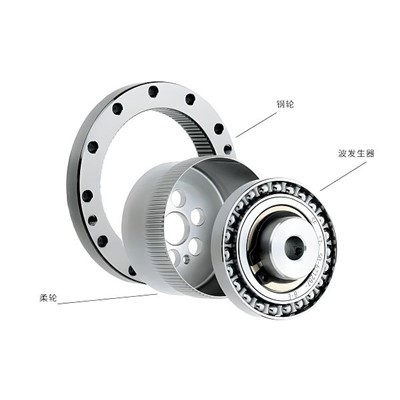
In conclusion, our robot reducer components are fully compatible with collaborative robots and offer several benefits, including improved performance, enhanced safety, increased flexibility, and lower costs. However, it is important to carefully consider the load capacity, speed and acceleration requirements, environment, and maintenance requirements of the cobot when using our reducers.
Harmonic Drive Components If you are interested in learning more about our robot reducer components and how they can be used in collaborative robots, please feel free to contact us. Our team of experts will be happy to assist you in selecting the right reducer for your specific application and provide you with all the information you need to make an informed decision.
References
- Nebot, E. M., & Cole, G. (2001). Mobile Robotics: Systems, Techniques and Applications. Springer.
- Siciliano, B., & Khatib, O. (Eds.). (2016). Springer Handbook of Robotics. Springer.
- Craig, J. J. (2005). Introduction to Robotics: Mechanics and Control. Pearson Prentice Hall.
Jiangsu Zhengfang Dynamics Technology Co., Ltd.
As one of the most professional robot reducer components manufacturers and suppliers in China, we’re featured by quality products and good price. Please rest assured to buy customized robot reducer components made in China here from our factory. Contact us for pricelist.
Address: Building 3, No. 69 Feitian Avenue, Jiangning District, Nanjing City, Jiangsu Province
E-mail: hanks.liu@zfdynamics.com
WebSite: https://www.zhengfangdongli.com/
