If you’ve ever stood at a playground watching kids laugh as they glide back and forth on a swing, or climb high above the mulch on a sturdy overhead ladder, you’ve probably paid little attention to the thin, squeaky chains holding those pieces of equipment up. As someone who’s spent the last 12 years running an Iron Chain supply business—partnering with playground designers, municipal recreation departments, and small play structure manufacturers across North America—those chains are the unsung heroes of safe, fun outdoor play. Most people don’t realize not all playground chains are created equal, and only specific types of equipment actually require iron chains to meet strict safety and durability standards. Today, I want to break down exactly what types of playground equipment rely on iron chains, why they’re the right choice for those pieces, and how we as a supplier make sure every chain we provide stands up to decades of rough play and weather. Iron Chain
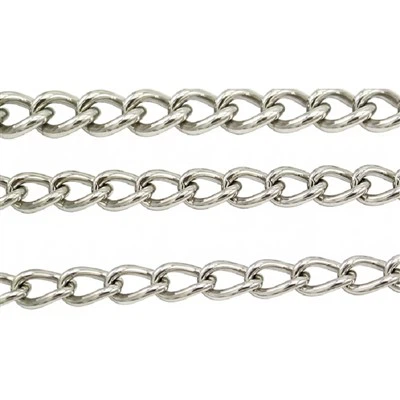
First, let’s get one thing straight: not all playgrounds use iron chains. Plastic or nylon chains are common for smaller, toddler-focused play areas where weight limits are low and cost is a top priority. But for high-traffic, community playgrounds that see kids from ages 3 to 12, iron chains are non-negotiable for several key pieces. Let’s start with the most iconic playground equipment: swings. That’s the first thing most people picture when they hear “playground chain”—and for good reason. Swings put a ton of stress on their chains, from the constant upward and downward momentum, to the sharp twists and turns kids often add when they lean or swing side to side. A standard nylon chain would stretch or snap after a few months of heavy use, but iron chains hold up to repeated impact and way more weight. Our iron chains for swings are hot-dip galvanized, which means they’re coated in a layer of zinc to resist rust from rain, snow, and humidity—critical for outdoor equipment that never gets stored inside. We also size our swing chains to match the exact swing seat size: 3/8-inch chains for regular adult-style swings, and 5/16-inch chains for toddler bucket swings, so they’re strong enough to hold a 100-pound kid (or more, if a parent joins in) without feeling bulky or dangerous.
Next up: overhead ladders, sometimes called “monkey bars” but not the wobbly, plastic kind you might remember from elementary school. Heavy-duty overhead ladders for community playgrounds are built to let kids climb several feet above the ground, gripping rungs spaced 12 to 18 inches apart. The chains that hang these ladders are a workhorse—they have to support the entire weight of a child as they hang, sway, and pull themselves across, plus the added force of a kid hopping from rung to rung. Unlike swing chains, which only need to support the weight of the seat and rider, overhead ladder chains have two mounting points: one at the top of the ladder, and one at the support beam of the play structure, so they distribute weight evenly across the entire length of the ladder. We test every batch of ladder chains to a static load of 1,500 pounds, which is way more than the maximum weight limit for a playground ladder (usually 400 pounds total). That extra testing is non-negotiable here—we’ve worked with a school district that had a generic chain break on a ladder three years ago, and since switching to our iron chains, they haven’t had a single incident. The difference is in the link design: our ladder chains have closed-loop links instead of open ones, so there’s no gap where a finger could get stuck, and they’re made from high-tensile iron that doesn’t bend or stretch over time.
Another piece of playground equipment that depends on iron chains is the zip line. Zip lines are super popular in newer community playgrounds because they let kids glide across a section of the park at 10 or 15 feet off the ground. The chains here aren’t what hold the zip line cable itself—wait, hold on, let me clarify that: the zip line’s main running cable is usually a steel cable, but the chains are what hang the zip line from the support trees or metal posts, and connect the handle that the kid grips. The handle’s connection is critical—if it were attached with nylon, the constant friction of the kid’s hands sliding back and forth would wear through the material in a matter of weeks. Iron chains have a smooth, galvanized surface that resists both friction and wear, so they can handle hundreds of grabs a day without fraying or breaking. We also add a secondary safety chain for zip line handles, just like we do for swings: a shorter, thinner chain that’s attached as a backup, so even if the main connection fails (which it never does with our products), the kid doesn’t go flying. A lot of first-time play structure designers don’t realize that zip line chains need to be flexible too—they have to bend with the handle as the kid swings, so we use a lighter gauge iron than we do for overhead ladders, but still strong enough to handle 800 pounds of dynamic force when a kid hits the end of the line.
Wait, there’s one more piece that often gets overlooked: suspended rope bridges. These are those wobbly bridges that hang between two play structures, made of rope or wooden planks, with handrails along the sides. The entire weight of the bridge and anyone walking across it is held up by thick iron chains mounted on the ends, anchored to the main play structure beams. The chains here have to handle a mix of static weight (the bridge itself) and dynamic weight (kids running, jumping, or bouncing on the planks). Rope bridge chains also need to be corrosion-resistant, since they’re often mounted close to the ground or near damp areas of the playground, so rust would eat through them in a few years. We’ve had a customer come to us last year with a custom rope bridge that was built for a 10-acre park, and they needed chains that could handle a 1,200-pound load spread across four chains, plus be flexible enough to let the bridge wobble safely when kids walked on it. We customized their chain links to have a slight curve, so they bend without kinking, and added a heavy-duty galvanizing coat that’s guaranteed to last 20 years. That’s the kind of custom work we do as a supplier—most people don’t know that playground equipment isn’t one-size-fits-all, and each piece has unique needs that require specialized iron chains.
Now, let’s talk about why iron chains are the best choice for these specific pieces, instead of other materials like steel wire rope or nylon. Nylon is cheap, but it has a low weight capacity and breaks down quickly in UV sunlight—after a year or two, it becomes brittle and can snap without warning. Steel wire rope is strong, but it’s rigid, which is bad for swings, overhead ladders, and zip lines that need to move and flex. Iron chains, on the other hand, strike the perfect balance: they’re flexible enough to bend with movement, strong enough to handle heavy loads, and extremely durable against weather and wear. Another big reason is safety: iron chains have a larger surface area than wire rope, so they’re less likely to pinch fingers. We design all our playground chains with rounded links, no sharp edges, and make sure the connections between links are smooth, so kids can grab them safely if they slip. That’s a big deal—playground safety is the number one concern for every park and school district we work with, so we don’t cut corners on material quality or testing.
As a supplier, we’ve learned over the years that the best partnerships don’t just involve selling chains—they involve educating our customers on what kind of chains they need. Last year, a small daycare center called us because they wanted to add a swing set for toddlers, and they were trying to save money by buying generic iron chains. We told them that generic chains from the hardware store aren’t designed for playground use—they don’t have the safety testing, the proper galvanizing, or the load capacity that playground equipment requires. We worked with them to get the right chains for their toddler swings, at a price that fit their budget, and even provided free installation guidance so they could put them up without hiring a contractor. That’s the kind of service we’re proud to offer—we’re not just an iron chain supplier, we’re a resource for anyone building or maintaining safe playgrounds.
I’ve been in this business long enough to see playgrounds change a lot, but one thing that’s stayed the same is the need for reliable, high-quality chains. Ten years ago, most playgrounds only had basic swing sets, but now they have complex pieces like zip lines, suspended bridges, and overhead obstacle courses—all of which depend on iron chains to keep them safe. The demand for our iron chains has gone up every year, and that’s because more and more people are realizing that cheap, generic chains aren’t worth the risk. A broken swing chain can cause a serious injury, and we take that responsibility very seriously. Every batch of iron chains we ship comes with a material certification, so our customers know exactly what they’re getting, and we stand behind every product we sell.

If you’re building a new playground, replacing old chains in an existing one, or just have questions about what kind of equipment works best with iron chains, we’re here to help. Whether you’re a small daycare, a municipal recreation department, or a private play structure manufacturer, we can provide custom-sized chains, bulk orders, and the guidance you need to keep kids safe and having fun. You don’t have to be an expert in playground equipment to get the right chains—just reach out, and we’ll walk you through every step.
Clothes Rack References:
- Consumer Product Safety Commission. (2022). Public Playground Safety Handbook. U.S. Consumer Product Safety Commission.
- American Society for Testing and Materials. (2021). Standard Safety Specification for Playground Equipment for Public Use. ASTM International.
- National Recreation and Park Association. (2023). Playground Equipment Maintenance Guidelines. National Recreation and Park Association.
- Steel Chain Institute. (2022). Galvanized Steel Chains for Outdoor Play Equipment. Steel Chain Institute.
Pujiang Shenli Chain Co., Ltd.
We’re well-known as one of the most experienced iron chain suppliers in China, featured by quality products and low price. Please feel free to buy discount iron chain made in China here from our factory. Contact us for more details.
Address: No. 18, Zaifeng Road, Pujiang County, Zhejiang Province
E-mail: Chen@shenlichain.com
WebSite: https://www.chainshenli.com/
