If you’ve ever dealt with a cracked pipe, a frayed hydraulic hose, or a damaged structural component, you know that choosing the right repair sleeve isn’t just a matter of slapping something on—It’s about matching the material to the stress, environment, and longevity your application demands. As someone who’s spent the last 12 years supplying repair sleeves to manufacturing, construction, and industrial maintenance teams, I’ve seen firsthand how a material choice that seems trivial can turn a quick repair into a costly failure. I get questions every week from maintenance supervisors, plant managers, and even small business owners: “What are repair sleeves even made of, and why does that matter for my job?” Today, I’m breaking down the most common materials we use, how they perform, and when each should be your go-to pick. Repair Sleeve
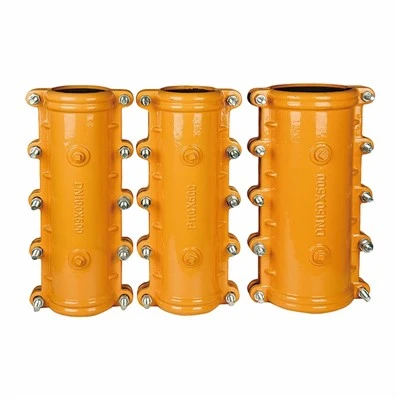
First, let’s start with the basics: A repair sleeve is not a one-size-fits-all product. At its core, it’s a tubular wrap that reinforces damaged sections of cylindrical parts—pipes, hoses, shafts, even electrical conduits. The material has to do three key things: bond tightly to the substrate (whether that’s steel, rubber, PVC, or another surface), resist the specific forces your part faces (pressure, abrasion, chemicals, temperature), and last as long as the job requires, no matter how tough the conditions. Over the years, we’ve tested dozens of materials, but six stand out as the workhorses of the industry, each with a clear niche.
Let’s dive into the first and most widely used: Carbon Fiber Reinforced Polymer (CFRP). If you’ve ever worked on aircraft, high-performance bikes, or even premium fishing rods, you know how light and strong carbon fiber is—It’s the same science we use in our repair sleeves. Here’s the science: CFRP is made of thin, woven carbon fiber strands embedded in a thermoset epoxy resin. When cured, it’s 5 times stronger than steel, but only 20% of the weight. That’s a game-changer for high-stakes applications: Think offshore oil and gas pipelines that deal with extreme hydrostatic pressure, or wind turbine shafts that spin at 100+ RPM and absorb constant torque. We supply CFRP sleeves for offshore rigs all the time, and we’ve seen them withstand 15,000 PSI of internal pressure without so much as a hairline crack. The epoxy matrix also seals out moisture, salt, and most industrial chemicals, so it’s perfect for marine environments. The catch? CFRP is rigid—It doesn’t flex well, so it’s not the best for hoses or parts that move, like hydraulic lines on construction equipment. For those applications, we reach for something more flexible.
Next up: Fiberglass Reinforced Polymer (FRP). A lot of people mix up FRP and CFRP, but the difference is in the fiber type and cost. FRP uses glass fibers instead of carbon, so it’s slightly less strong (about 70% of CFRP’s tensile strength) but far more affordable—often 30-40% cheaper. That makes FRP the go-to for everyday industrial pipe repairs. Let’s talk about the science: Glass fibers are drawn from molten silica, woven into mats or fabrics, and embedded in either epoxy or polyester resin. Polyester resin is more common for FRP sleeves because it cures faster and is resistant to mild acids and bases, which is perfect for water treatment plants or municipal plumbing. We use FRP for routine repairs on PVC and steel water pipes all the time, and it holds up against freeze-thaw cycles, minor corrosion, and 1,000 PSI of pressure—more than enough for most residential and commercial plumbing. One thing to note: FRP isn’t as UV-resistant as CFRP. If you’re repairing an above-ground pipe in a sunny climate, we’ll often add a UV-stabilized topcoat to prevent the resin from breaking down over time. Left uncoated, FRP can fade and become brittle after 2-3 years of direct sunlight, so it’s a detail that’s easy to overlook but makes a big difference in longevity.
Now, the material you’ll find on almost every hydraulic hose or rubber pipe: Neoprene Rubber. Wait, I know—rubber for a repair sleeve? Hear me out. Neoprene is a synthetic rubber, and it’s made by polymerizing chloroprene, a chemical that gives it unique properties. Unlike natural rubber, which swells up when exposed to oil or gasoline, neoprene is oil-resistant, heat-resistant up to 225°F, and flexible enough to stretch around a damaged hose without cracking. That’s exactly what you need for hydraulic hoses that flex every time a machine moves. Let’s do a quick test: Last year, a construction company brought us a 4-inch hydraulic hose on a bulldozer that had a 2-inch long fray along the side. A metal sleeve would have been too stiff, a CFRP sleeve would have split as the hose flexed. Neoprene is the perfect fit here. Our neoprene repair sleeves are reinforced with a polyester mesh core, so they don’t stretch out over time—they hug the hose tightly, seal in hydraulic fluid, and resist abrasion from dirt and gravel. The downside? Neoprene isn’t good for extremely high pressure—It tops out at around 500 PSI, so it’s only for low to medium-pressure hoses. For high-pressure hydraulic lines, we pair neoprene with a nylon fabric backing.
Which brings me to Nylon Fabric Reinforced Sleeves. Nylon is a polyamide polymer, and its superpower is tensile strength and flexibility. We use woven nylon fabric as a liner for a lot of our repair sleeves, especially for hoses and ducts that need to stretch or bend repeatedly. The nylon fibers are drawn into thin threads, woven into a tight fabric, and then coated with a polyurethane or latex layer to seal it. The result? A sleeve that’s flexible enough to wrap around a 90-degree elbow duct, strong enough to resist being punctured by small debris, and resistant to most chemicals, including gasoline and diesel. We supply nylon sleeves for agricultural equipment all the time—farmers use them to repair irrigation hoses and tractor fuel lines. The great thing about nylon is that it’s low-cost and easy to install: You just cut it to length, wrap it around the damaged part, and apply a heat shrink band or adhesive. It doesn’t require special curing equipment, so even a small farm maintenance team can do the repair themselves in 10 minutes. The limit here? Nylon melts at around 400°F, so it’s not for applications with extreme heat, like exhaust pipes or furnaces.
For high-heat applications, we turn to Silicone Rubber. Silicone is a synthetic rubber made from silicon, oxygen, carbon, and hydrogen, and it’s the most heat-resistant material in our lineup. It can withstand temperatures from -100°F up to 500°F, which makes it ideal for repairing exhaust lines, furnace ducts, and engine parts. A few months ago, a food processing plant contacted us because their steam pipe was leaking at a joint that ran right next to a boiling vat—The pipe was hitting 350°F, so no neoprene or FRP would work. Silicone was the only option. Our silicone repair sleeves are reinforced with fiberglass mesh, so they don’t sag at high temperatures, and they’re coated with a high-temperature adhesive that bonds to metal and rubber surfaces. They also resist moisture and food-grade chemicals, which is why food processing plants love them—no risk of leaching into their products. The downside? Silicone is not very strong in tension, so it’s only for heat exposure, not high pressure. If you have a steam pipe at 1,000 PSI, you’d pair a silicone outer layer with a CFRP inner core for strength.
Last but not least, Metal Repair Sleeves—specifically, Steel and Stainless Steel. You might think metal is only for full pipe replacements, but metal repair sleeves are perfect for damaged pipes that need extreme rigidity. Carbon steel sleeves are cheap and strong, but they rust, so we use them for underground pipes that are buried and out of direct sunlight. Stainless steel sleeves, on the other hand, are corrosion-resistant, so they’re used for marine pipes, chemical processing equipment, and food industry pipes that need to be sanitized. We supply stainless steel sleeves for a chemical plant in Texas that handles sulfuric acid—The steel resists acid corrosion, and it’s strong enough to hold back 2,000 PSI of internal pressure. The catch? Metal sleeves are heavy, so installation is more labor-intensive—you need to clamp them in place, and they’re not ideal for hoses or moving parts, since they can chafe against other components.
Now, I want to be honest with you—there’s no “best” material for repair sleeves. The right choice depends entirely on your application. Let’s break down a quick guide I use with every customer: If you’re repairing a high-pressure, static pipe in a marine or industrial setting, go with CFRP. If it’s a routine water pipe repair for a municipal job, FRP is the most cost-effective. For a hydraulic hose on a construction machine, neoprene with a nylon backing is your pick. For a flexible duct or agricultural fuel line, nylon fabric works. For a steam pipe or exhaust part, silicone is non-negotiable. For underground or corrosive pipes, steel or stainless steel.
Over the years, I’ve seen too many people cut corners on material choice to save a few bucks, only to end up re-repairing the same part six months later. Last year, a small business owner came to us after using a cheap nylon sleeve on a high-pressure hydraulic hose. The sleeve stretched and split within a month, leading to $12,000 in downtime for his excavator. That’s why we’re so careful about matching materials to jobs—It’s not just about selling a sleeve, it’s about making sure the repair lasts.
If you’re not sure which material is right for your repair, don’t guess. Every application has unique factors: pressure, temperature, environment, movement, and chemical exposure. We work with maintenance teams, plant managers, and equipment owners all over to test parts, assess their needs, and recommend the right sleeve. Whether you need a custom-sized sleeve for a one-off repair or bulk sleeves for an entire factory, we can help.
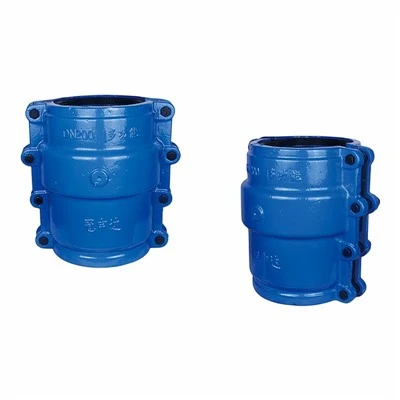
Reach out to our team to discuss your project and get a tailored recommendation for the right repair sleeve material for your needs.
Elbow Repair Clamp References
- Carbon Fiber vs. Fiberglass: Mechanical Properties and Applications, Composites Manufacturing Magazine, 2022
- Synthetic Rubber Selection Guide for Industrial Applications, Society of Plastics Engineers, 2021
- Repair Sleeve Materials for High-Pressure Pipe Reinforcement, Journal of Pipeline Engineering, 2020
- Heat-Resistant Elastomers for Industrial Maintenance, Rubber Chemistry and Technology, 2019
Fujian Fufa Valve Manufacturing Co., Ltd.
As one of the most professional repair sleeve manufacturers and suppliers in China, we’re featured by quality products and good price. Please rest assured to buy durable repair sleeve made in China here from our factory. Welcome to view our website for more information.
Address: Meilin Xikou Industrial Zone, Nan’an City, Quanzhou City, Fujian Province
E-mail: hongwenjin@fufafamen.cn
WebSite: https://www.fufavalve.com/
