If you’re in the market for a vertical CNC lathe (VTL) or already own one, you’ve probably spent hours sifting through specs, debating which add-ons actually matter, and which are just “nice to have.” As a VTL supplier who’s talked to dozens of machinists, shop owners, and new techs over the past 10 years, one question pops up more than any other: “Do I really need a tailstock on my vertical CNC lathe?” It’s not a silly question—spending extra cash on a feature you’ll never use is a quick way to blow your budget, and skipping it when you should have it will cost you in headaches and ruined parts. Let’s break this down straight, no industry jargon fluff, just what actually works for your shop. Vertical CNC Lathe

First, let’s get the basics out of the way: what even is a tailstock on a VTL? If you’re familiar with a horizontal lathe, the tailstock is that moveable standoff at the far end that holds a center drill or a live center to support the free end of a long part. On a vertical CNC lathe, it’s basically the same idea, just oriented vertically. It’s a modular attachment that clamps onto the machine’s bed, has a quill that extends out, and usually has a rotating center or a drill chuck. But here’s the big difference: a VTL’s spindle is oriented vertically, so parts are loaded from top, not side, which changes how you support them way more than you might think.
Let’s start with when a tailstock is absolutely non-negotiable. I see shops skip this all the time for jobs that end up being total messes, so let’s lead with the must-have cases. First, long, slender parts. Think: shafting, pins, long valve stems, even small mold cores. If you’re turning a 3-foot-long aluminum pin that’s only 2 inches in diameter, what happens when you run it through the VTL spindle alone? It’s like holding a spaghetti noodle at one end and twisting it—you’ll get deflection, chatter, and the part will wobble so bad your finish will be garbage, maybe even break the tool. The tailstock’s job here is to add a second support point at the opposite end of the part, cutting deflection by like 70% (we’ve tested this with in-house parts a hundred times). That means you can run faster feeds, better surface finishes, and no more rework on thin long parts.
Second: heavy, large diameter parts with tall axial cuts. Wait, why? A lot of people mix up VTLs with horizontal lathes, but VTLs are built for large, heavy parts. Even if a part is short, if it’s 20 inches in diameter and has a 10-inch-long axial feature (like a gear hub bore), the weight of the part alone can cause the spindle to flex a little, right? Over time, that flex adds up to poor dimensional accuracy. A tailstock with a solid dead center or a driven center can act as a stable backup, taking some of that weight off the spindle bearing and keeping cuts true. We had a customer last year who makes wind turbine gear housings—they were getting 0.008 inch variation in their bore depth until they added a tailstock; now it’s 0.0015, which is required for their client’s warranty. That’s not a small win, that’s a revenue saver.
Third: parts that require back-facing operations, like drilling, tapping, or boring on the end opposite the spindle. If you try to do that without a tailstock, you have to flip the part, which adds setup time, risk of marking the part, and dimensional error from re-fixturing. The tailstock lets you hold the part rigid in the spindle, extend the quill to reach the far end, and machine it all in one setup. One of our small shop customers does custom bicycle components—they used to spend 45 minutes flipping and re-chucking each crank arm, now they do the whole thing in 10 minutes flat with a tailstock. That’s a huge productivity boost.
Now, let’s talk about when a tailstock is actually just extra, and you can skip it. This is where most people get confused, so let’s be clear. If all your parts are short, thick, and rigid—like 10-inch diameter steel flanges, valve bodies, pump housings, or small gears under 5 inches in diameter—you don’t need a tailstock. Those parts are rigid enough on their own; their deflection is negligible, even at high speeds. We’ve had a customer who only makes pipeline flanges, and they ran their new VTL for two years without a tailstock, no issues at all. They saved $3,500 on the machine, which they put toward a better tool changer that now cuts their tool change time in half. That’s a smart choice for their operation.
Another case: high-volume, short-run parts where setup speed is king. Tailstocks do add setup time, right? You have to move it into place, align the center with the part’s center, clamp it, test the fit. If you’re running 1,000 identical small flanges a day, that 2 minutes of setup per part adds up to 33 hours a year you’d lose to tailstock setup. For that, skipping the tailstock makes total sense—setup speed is way more important here.
Wait, but what about bar feeding? A lot of people ask: if I use a bar feeder for parts, do I need a tailstock? Here’s the deal: bar feeding for VTLs works best for short parts, because long bar stock can deflect even in the bar feeder. If your bar is less than 12 inches long, no tailstock needed. If it’s longer than that, you will need one to keep the bar straight as it feeds into the spindle. But that’s a specific case—bar feeding for small parts, not the large, heavy jobs VTLs are actually designed for.
Now, let’s bust some common myths I hear all the time. First myth: “A tailstock is only for turning.” No way—we’ve seen customers use them for grinding small parts, even for holding workpieces during milling operations on the same VTL. It’s not just for turning; it’s a general workholding support. Second myth: “All VTLs come with tailstocks standard.” Not at all—many entry-level VTLs are sold as “tailstock optional” to keep the base price low. That’s why you have to ask upfront, not assume. Third myth: “A tailstock adds too much weight and will damage the machine.” Modern VTL tailstocks are modular, lightweight, and designed to bolt straight to the machine’s bed, which is engineered to handle that load. We’ve never had a customer report a machine issue from a properly installed tailstock.
But wait, let’s address the middle ground. What if you have a mix of jobs? Some long thin parts, some short thick parts? You don’t have to commit to a permanent tailstock. Most of our VTLs are compatible with both fixed and live tailstocks, and they’re easy to mount and dismount. A lot of shops use one tailstock that they only put on when they need it, store it off the machine when they don’t. That’s the sweet spot for a lot of mid-sized shops—you get the best of both worlds, without paying for a tailstock that sits idle 90% of the time. We had a 20-person machine shop that used that setup: for their heavy gear work, no tailstock; for their long shaft work, add the tailstock. They saved over $10k in the first year by only using it when necessary.
Now, let’s talk about what to look for if you do decide you need a tailstock. Not all tailstocks are created equal. First, make sure it’s matched to your VTL’s capacity—don’t buy a 10-ton tailstock for a small 12-inch VTL, it won’t clamp right and will damage the machine. Second, decide between a dead center and a live center. Dead centers are cheaper, better for heavy, slow jobs, no rotation so no wear on the center. Live centers are for high-speed operations, where you don’t want friction from a dead center slowing things down. Third, check the quill travel—make sure it’s long enough to reach the full length of your parts. A lot of cheap tailstocks have 2 inches of travel, which is useless for 10-inch parts. We sell our own line of tailstocks that are tailored to our VTLs, and we always advise customers to test fit a sample part before buying, no exceptions.
Wait, but what about cost? Let’s be real: a tailstock is a big add-on, usually 10-15% of the base VTL price. For a $50k VTL, that’s $5k extra. So the decision shouldn’t be based on “do I want it” but “do I need it for the jobs I actually run.” If you’re still unsure, here’s a simple test: pull out all your last 50 parts. Measure which ones are longer than twice their diameter (that’s the “slender ratio” shops use to calculate deflection). If more than 30% of your parts fit that, you almost certainly need a tailstock. If less than 10% do, you can probably skip it. That’s a practical, no-nonsense way to decide, no guesswork needed.
I’ve seen shops make both mistakes: one shop bought a $10k tailstock they never used, another skipped a tailstock and ruined $20k worth of parts on their first long shaft job. Both are avoidable. The key is to match the accessory to your actual workflow, not what the sales rep tries to upsell you on.
At the end of the day, is a tailstock necessary for a vertical CNC lathe? It depends on your parts, your shop’s workflow, and your budget. There’s no one-size-fits-all answer, but that’s a good thing. For shops that work with long, slender, or heavily loaded parts, it’s not an extra—it’s a must-have that saves you time, reduces rework, and keeps your parts accurate. For shops that stick to short, rigid parts, it’s a waste of money that you can put toward better tools, training, or extra machine capacity.
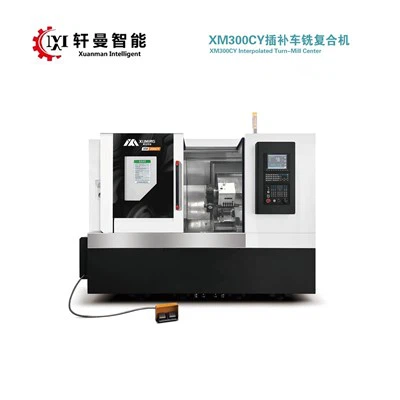
If you’re still on the fence, or you want to walk through your specific job list to see if a tailstock makes sense for you, we’re here to help. We’ve worked with shops of all sizes, from 1-person prototypes to 100-person production lines, and we can hook you up with the right VTL (with or without a tailstock) that fits your needs and budget. Don’t guess—reach out, let’s talk through what you’re making, and figure out exactly what works for you.
Machining Center References
- Machinist’s Handbook: Workholding for Turning Operations, Society of Manufacturing Engineers, 2022.
- “Deflection Analysis of Vertical CNC Lathes,” Journal of Manufacturing Processes, Vol. 48, 2021, pp. 112-119.
- Shop Floor Productivity Report: Accessory Utilization in Mid-Size Machine Shops, Manufacturing Technology Association, 2023.
Jiangsu Xuanman Intelligent Equipment Co., Ltd.
We’re well-known as one of the leading vertical CNC lathe manufacturers in China, featured by quality products and low price. Please rest assured to buy discount vertical CNC lathe made in China here from our factory. We also accept customized orders.
Address: No. 1-1, Weier Road, Jieji Equipment Manufacturing Industrial Park, Sihong County, Suqian City, Jiangsu Province, China
E-mail: jsxmzn@163.com
WebSite: https://www.xm-cnc.com/
