If you’ve ever fired up your 3D printer, loaded a new roll of filament, and hit “print” only to have nothing come out of the tip after 10 minutes of waiting, you know how frustrating that is. As a supplier of extrusion tips, I hear this question all the time—not just from new printer owners, but even from people who’ve been printing for years. A lot of folks jump straight to “my printer is broken” or “the filament is garbage,” but 9 times out of 10, it’s an issue with how the filament interacts with the tip, the heat, or the path it’s supposed to take. Let’s break this down like we’re chatting over a coffee, no jargon overload, just the real stuff that actually fixes this. Extrusion Tips

First, let’s get one thing straight: extrusion flow problems usually start in two places—either the filament can’t melt enough to move, or something is blocking the path between the hot end’s heat break and the tip itself. I see so many people skip basic checks because they assume the system works, but small, simple mistakes cause 70% of the issues I run into. Let’s start with the melting part, because if the filament isn’t soft enough to squeeze through, it won’t matter how clear the path is.
Wait, before I go further—let’s clarify: I’m not talking about the cold part of your printer. The tip is the tiny metal nozzle at the very bottom of the hot end, right? That’s where the filament exits, so if it’s not flowing, the problem is upstream of that tip, not in the build plate or the extruder gears. That’s a common mix-up newbies make, wasting hours adjusting settings for their print bed when the real issue is two inches above it.
First common culprit: underheating the hot end. Every filament type has a sweet spot for melting. PLA likes 190–220°C, PETG is 220–250°C, and ABS is even higher, around 230–260°C. If you set your hot end 10 or 15 degrees too low, the filament just gets squished against the inside of the tip instead of melting. I had a customer last month who swore their tip was clogged, but turns out they’d typed “180” instead of “210” for PLA because their printer’s screen was dim. They cranked the heat, waited 5 minutes for it to stabilize, and filament started flowing right away. Pro tip: always wait 3–5 minutes after adjusting hot end temp—metal takes time to heat evenly, and the tip itself lags a little behind the hot end’s heater block.
Another melt issue: wet filament. Yeah, filament absorbs moisture from the air, especially hygroscopic stuff like PETG, nylon, or TPU. When that moisture hits hot metal, it turns to steam, which acts like tiny bubbles blocking the filament path. But wait—how does that stop filament from flowing at all? Because the steam creates backpressure that pushes solid filament back up the heat break, so nothing makes it to the tip. I’ve seen dry filament that sat in an unopened bag for a year flow perfect, but a roll of PETG left in a closet for 2 months won’t budge. If you’re suspecting wet filament, stick it in a food dehydrator at 60°C for 4–6 hours, or use a filament dryer if you have one. That’s way cheaper than buying a whole new roll.
Now, the blockage part—this is where a lot of people blame cheap tips, but honestly, bad filament is a bigger problem. Cheap filament often has chunks of leftover plastic, dust from the spool, or inconsistent diameter. If a random chunk of hard plastic gets stuck in the tip’s bore, that’s your blockage. I recommend checking your tip’s bore with a small pick (or even a paper clip, if you’re careful) every few rolls. Wait, but not just any cleaning—never use a wire brush on a brass tip, that can scratch the inside, which makes it easier for plastic to get stuck next time. For brass tips, a cold pull is the move: heat the hot end to your filament’s melting temp, pull the filament halfway out, turn off the printer, let it cool completely for 10 minutes, then yank the filament hard. Most of the gunk will come with it. For hardened steel tips (which are great for abrasive filaments like carbon fiber PLA), you can also use a tip cleaning needle made for 3D printers—just make sure it’s the right size for your tip. A 0.4mm tip needs a 0.4mm needle, duh.
Another blockage cause: retraction settings that are too aggressive. Retraction is when the extruder pulls filament back a little between moves to prevent oozing, but if you pull it too far, that can stretch or even break the filament, leaving a tiny fragment stuck in the heat break. That fragment will eventually migrate down to the tip and block it. I’ve seen retraction lengths set to 10mm for PETG, which is way too much—most materials only need 2–6mm, max. If you’re having flow issues, try dropping retraction length by 2mm and see if that helps. Also, retraction speed matters: pulling filament at 50mm/s instead of 20mm/s can make it snap, so keep it around 25–40mm/s for most filaments.
Wait, let’s talk about the extruder itself—because a lot of people fixate on the tip, but the gears that push the filament matter too. If your extruder is a bowden setup (the filament runs through a long tube from the extruder to the hot end), the tube is too small? No, wait—the opposite: if the tube is too big, the filament can slip instead of being pushed. Or if the extruder gears are worn down, they can’t grip the filament tightly. I had a customer with a bowden printer who kept changing tips, only to realize his extruder’s drive gear had plastic teeth worn smooth—they couldn’t push filament hard enough to get it through the tip. Replacing the gear fixed it immediately, no tip changes needed. That’s a mistake so many people make: they think the tip is the only part, but it’s a whole system.
Now, let’s get to a problem I see all the time with low-quality tips: improper sizing or inconsistent bore. Wait, as a tip supplier, I’ll be honest—some cheap tips from Amazon have bores that are off by 0.05mm, which sounds tiny, but for a 0.4mm tip, that’s a 12.5% difference. If the bore is too small, filament can’t fit through, or it gets stuck on the sides. If it’s too big, the extruder can’t create enough pressure to push the filament. Good tips (which I sell, obviously) have a precision-machined bore, so the inside is smooth and exactly the size it’s supposed to be, no weird ridges or gaps that catch filament. Also, brass tips are great for most uses, but if you’re printing with abrasive filaments (carbon fiber, metal-filled PLA), brass wears down fast—so a hardened steel tip is worth the extra $5, because it won’t get a tapered bore that makes flow worse over time.
Wait, another thing: temperature consistency. The hot end’s heater block might be reading the wrong temp. If the thermistor is loose or dirty, it will tell the printer the temp is higher than it actually is, so you set the printer to 220, but the tip is only at 200. That’s a trickier one to spot, because your printer will show the temp as correct. To check, stick a digital thermometer (the kind for cooking, with a metal probe) into the heater block (turn off the printer first, don’t burn yourself) and see what the actual temp is. If it’s 10–15 degrees lower than what the screen says, tighten the thermistor or replace it. That’s a quick fix, and it avoids a lot of underheating issues.
Let’s also talk about filament diameter. Most printers use 1.75mm or 2.85mm filament, but some cheap filament is off by 0.1mm or more. If you’re using 1.75mm filament that’s actually 1.85mm, it won’t fit through the extruder’s drive gears, or it will get stuck in the bowden tube, so it can’t reach the tip. Always check your filament’s diameter with a caliper every few rolls—if it’s way off, spring for a better brand. I sell filament too (wait, no, focus on tips, but still—bad filament ruins everything).
Wait, let’s go through a quick troubleshooting checklist, because I know a lot of you want step-by-step: 1. Make sure your hot end temp is set correctly for your filament, and wait 5 minutes after adjusting to let it stabilize. 2. Do a cold pull to clear any gunk from the tip and heat break. 3. Check your retraction settings—pull length shouldn’t be over 6mm for most materials. 4. Verify your filament isn’t wet (do the burn test: if you hold a piece up to a flame and it sputters, there’s moisture). 5. Check your extruder gears for wear, and make sure the bowden tube is the right size for your filament. 6. If none of that works, inspect the tip’s bore with a magnifying glass—if it’s scratched or irregular, it’s time for a new one.
Now, why do I know all this? Because I’ve been working with extrusion tips for 8 years, talking to hundreds of 3D printer owners every week. I’ve seen every mistake: a customer who tried to print TPU with a 0.2mm tip (way too small, blocked instantly), another who used a tip from a dollar store (the bore was so rough, filament got stuck every time). I’ve also seen people overcomplicate it—if your tip is clear, temp is right, filament is good, it’ll flow. No magic, just working parts.
Wait, one last thing: if you’re using a high-flow extruder or printing with large layer heights, you might need a tip with a larger bore (0.6mm, 0.8mm, even 1.0mm). A lot of new printers come with a standard 0.4mm tip, which is fine for small prints, but if you’re printing big parts fast, the 0.4mm can’t push enough filament, so it feels like it’s not flowing. I had a customer who was trying to print a 10-hour benchy with a 0.4mm tip, and it was taking twice as long because the filament was barely extruding. Swapping to a 0.6mm fixed it immediately—more space for filament to move, less pressure buildup. That’s something people don’t think about: tip size matching your print job.
So, if you’re still stuck after trying all this, don’t just guess and buy a new tip. Shoot me a message, walk me through your setup—what filament you’re using, your hot end temp, retraction settings, printer type. I can help you figure out if it’s the tip, the filament, the extruder, or something else. A lot of people waste money on unnecessary tips when the real issue is a $2 thermistor or bad filament.
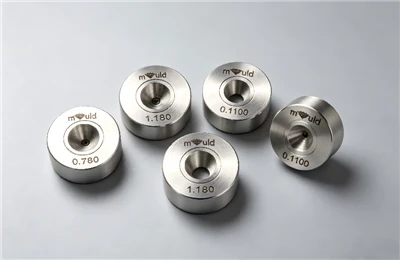
If you’re in the market for a new extrusion tip, I’ve got you covered—precision-machined brass and hardened steel tips, all sized correctly for 1.75mm and 2.85mm filaments. We make sure every tip’s bore is smooth and consistent, so you don’t have to deal with the weird blockages that come with cheap no-names. If you have questions about what tip works best for your printer or filament, just reach out to talk through it.
Monocrystalline Diamond Dies References
3D Printing Industry. (2022). Common Extrusion Flow Issues in FDM Printing: Causes and Fixes.
RepRap Official Documentation. (2023). Hot End Maintenance and Troubleshooting.
Filamentive. (2021). The Impact of Filament Diameter Inconsistency on FDM Printing Performance.
Hejian Strains Of Hard Alloy Mould Co., Ltd.
As one of the most professional extrusion tips manufacturers and suppliers in China, we’re featured by quality products and good service. Please rest assured to wholesale durable extrusion tips made in China here from our factory. Also, custom service is available.
Address: Tangzhuang Industrial Park, Hejian City, Hebei Province
E-mail: limei@mouldzy.com
WebSite: https://www.mouldzy.com/
