If you’ve ever walked into a dental clinic, a small hospital operating room, or a diagnostic lab, you’ve likely seen a staff member wheeling a steel cart loaded with wrapped metal instruments, surgical tools, or glassware. That cart holds tools that have been run through an autoclave—the heavy-duty machine that uses high-pressure steam to kill harmful microorganisms, from bacteria to stubborn spores, and make tools safe for patient use. As someone who’s supplied autoclaves to medical, research, and industrial facilities for 12 years, I’ve seen firsthand how even the best autoclave can develop tiny, easy-to-miss flaws that break its sterilization cycle—and that’s where spore testing comes in. It’s not a random checkbox on a compliance form; it’s the single most reliable way to prove your autoclave is doing the job it’s supposed to do. Let’s break down why that matters, how it works, and why skipping it is a dangerous mistake. Autoclave

First, let’s get clear on what an autoclave actually does, and why spores are the gold standard for testing its performance. Sterilization, unlike simple cleaning or disinfection, means eliminating every form of microbial life—including highly resistant bacterial spores. Spores are like the survival pods of the microbial world: they have a tough, protective outer coat that lets them survive extreme heat, cold, and harsh chemicals that would kill regular bacteria or viruses. That’s exactly why they’re perfect for testing autoclaves: if your machine can kill spores, it can kill every other microorganism it might encounter on medical tools or lab equipment. If it can’t kill spores, it’s not truly sterilizing anything.
Over the years, I’ve had too many conversations with new lab managers or clinic owners who assume their autoclave is working because the light on the machine says “cycle complete,” or because they ran a quick visual check on a load of tools. But those are easy, and often dangerous, assumptions. I remember one customer a few years back, a small pediatric clinic, who’d just bought a mid-tier autoclave from a big-box medical supply retailer. The clinic staff ran a cycle every morning, checked that the tools looked dry and clean, and thought they were in compliance—until a state health inspector showed up for a routine audit and failed their facility. The inspector pulled a spore test, incubated it, and found viable Geobacillus stearothermophilus (the standard spore used for autoclave testing) growing in the sample. When we went to look at the autoclave, we found a tiny clog in the steam line that no amount of visual checks would have caught. The light was turning green, steam was getting into the chamber, but it never reached the 121 degrees Celsius (250 degrees Fahrenheit) for 15 minutes required to kill spores. That clinic almost had to shut down its surgical and dental procedures for a week while we repaired the machine and reprocessed all its tools from the past month. That’s the kind of avoidable mistake spore testing prevents.
So why are other testing methods less reliable? Let’s go through them to see why spore testing stands alone. First, there’s chemical indicator strips—those little colored tabs you stick inside an autoclave load. They change color when exposed to heat or steam, but they only tell you that temperature and steam were present. They can’t tell you if the temperature was consistent for the full required time, or if the steam reached every nook and cranny of a wrapped instrument, or if a clog cut the cycle short in the middle. I’ve seen chemical strips turn bright black (the “pass” color) because the chamber got hot for two minutes, but the full 15 minutes needed to kill spores never happened. Then there’s biological indicators, which is exactly what spore testing is. Unlike chemical indicators, biological indicators use live, resistant spores, so if they survive, your cycle failed—not because the test is unreliable, but because your machine didn’t do its job.
Another common myth I hear is: “My autoclave is brand new, so it can’t have problems.” New machines aren’t immune. We’ve had customers with brand-new units from major manufacturers call us panicking because their first spore test came back positive. Sometimes it’s a manufacturing defect in the steam valve, sometimes it’s a shipping accident that bent a small internal component during transit. Autoclaves are precision machines—even a tiny misalignment can throw off the pressure and temperature balance that makes steam sterilization work. Spore testing is the only way to catch that before you use the machine on patient care, lab samples, or critical industrial materials like culture media or pharmaceutical components.
Now, let’s talk about how spore testing actually works, because it’s not complicated, and it’s non-disruptive to your workflow. There are two main types of biological indicators for autoclaves: spore strips and self-contained ampules. For a spore strip, you place the strip (which has a measured amount of G. stearothermophilus spores on it) in the center of a typical load—this is the hardest spot in any autoclave load to reach steam, so if the spore there is killed, every other spot in the chamber will be safe. You run a full, normal sterilization cycle with the strip, then after the cycle, you put the strip into a vial of growth medium, incubate it at the correct temperature (around 55-60 degrees Celsius) for 24 to 48 hours. If the medium stays clear, no spores survived—your autoclave passed. If it turns cloudy, that means spores grew—your cycle failed, and you need to fix the machine and reprocess any items from that load. Self-contained ampules work the same way, but you break a seal in the ampule after the cycle to release the growth medium, which is even easier for busy clinic or lab staff.
Most regulatory bodies—from the CDC in the U.S. to the WHO for global health facilities—require spore testing on a regular schedule: at least weekly for most clinical settings, and after every repair or relocation of an autoclave. For high-risk areas like surgical suites, some facilities even test after every load. I always advise customers to follow at least the minimum requirements, but to adjust based on their use. If you’re running an autoclave 10 times a day, every day, you’re putting more wear and tear on the machine than a facility that runs it twice a week for small batches of tools, so more frequent testing makes sense.
I also get a lot of questions about cost, because some people think spore testing is an unnecessary expense. Let’s put that in perspective: a box of 100 spore test strips costs around $50 to $70, which is less than $1 a test. The cost of a single failed sterilization cycle? It can mean reprocessing hundreds of dollars’ worth of tools, delaying patient procedures, or even facing a compliance fine from a state health inspector. The cost of a lawsuit if a patient gets an infection from improperly sterilized tools? That’s in the tens of thousands of dollars, at minimum. Spore testing is one of the lowest-cost, highest-return investments you can make for your facility’s safety and compliance.
Another point: spore testing isn’t just for clinical settings. We supply autoclaves to research labs that work with biohazardous materials, food processing plants that sterilize equipment for packaging, and even tattoo parlors that need to keep tools safe for clients. In all of these settings, spores are the measuring stick for successful sterilization. I once worked with a craft brewery that used an autoclave to sanitize its brewing equipment. They’d been skipping spore testing for a year, assuming their machine worked because it looked fine, until a batch of beer got contaminated with bacteria that made customers sick. A quick spore test on their autoclave found that the temperature was off by 5 degrees Celsius, which is all it takes to let some spores survive. Fixing the autoclave and adding weekly spore testing saved the brewery from a reputation hit and costly product recalls.
Now, let’s address a common mistake people make: interpreting a spore test result wrong. I’ve had customers call us upset because their test came back positive, thinking it means their tools are contaminated, but that’s not always the case. Sometimes a positive test is from a bad strip—though rare, spore strips can be contaminated during manufacturing. Sometimes it’s from an incomplete cycle: maybe the door didn’t seal all the way, or the power cut out mid-cycle. The right response to a positive test isn’t panic—it’s to run another test, check the autoclave’s components, and fix whatever caused the failure. That’s exactly why spore testing works: it gives you a clear answer, not an assumption.
Over the 12 years I’ve been in the autoclave supply business, I’ve seen too many facilities cut corners on spore testing, and the results are never good. It’s not just a regulatory box to check—it’s the difference between keeping patients safe and putting them at risk, between running a compliant facility and facing fines or closure. When I sell an autoclave to a customer, I don’t just hand them the machine and a manual. I walk them through the spore testing process, explain the schedule, and tell them exactly what to do if they get a positive result. I also tell them that if they ever need help, my team is just a call away—whether it’s troubleshooting a test result, repairing an autoclave, or explaining compliance requirements.
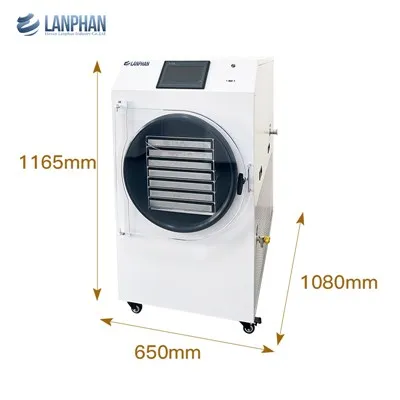
If you’re still relying on visual checks or light indicators to prove your autoclave is sterilizing properly, it’s time to make spore testing a regular part of your workflow. It’s simple, affordable, and it’s the only way to be 100% sure your machine is doing what it’s supposed to do. Whether you’re a clinic manager, lab director, or industrial operations lead, we can work with you to choose the right autoclave for your needs, set up a spore testing schedule that fits your workflow, and provide ongoing support to keep your sterilization processes safe and compliant.
Spray Dryer References
- Centers for Disease Control and Prevention (CDC). Guideline for Disinfection and Sterilization in Healthcare Facilities, 2008.
- World Health Organization (WHO). Guidelines for Sterilization in Health Care Settings, 2016.
- Occupational Safety and Health Administration (OSHA). Bloodborne Pathogens Standard, 29 CFR 1910.1030.
- Rutala, W. A., Weber, D. J. (2019). "Sterilization and Disinfection: An Update for Healthcare Facilities." American Journal of Infection Control.
- Food and Drug Administration (FDA). Medical Device Sterilization: Guidelines for Steam Sterilization, 2021.
Henan Lanphan Industry Co., Ltd.
We’re well-known as one of the leading autoclave suppliers in China, featured by quality products and good price. Please rest assured to wholesale durable autoclave for sale here from our factory. For more information, contact us now.
Address: Room 801, East Tower, Xiyuan Square, Zhongyuan District, Zhengzhou City, Henan Province
E-mail: lanphanindustry@lanphan.com
WebSite: https://www.lanphanindustry.com/
