If you’ve ever shopped for LED T-bulbs, you’ve probably stared at the price tag and wondered: “Is the extra cost worth it?” For me, that question hits close to home— I’ve spent the last 8 years running a small LED bulb supply business, and 90% of the calls I get from potential customers start with that exact line. Lately, one question has become even more common: “Do LED T-bulbs even come with a warranty?” It’s a fair question, especially when you’re shelling out $15 to $25 for a bulb that’s supposed to last 20,000+ hours (that’s 18 years if you use it 3 hours a day, by the way). After thousands of installs, dozens of customer complaints, and way too many late nights troubleshooting, I’ve got firsthand answers that don’t come from a sales sheet or a corporate press release. LED T-Bulb
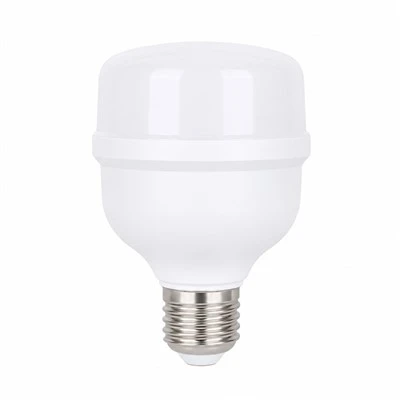
First, let’s cut through the noise: Not all LED T-bulb warranties are created equal. But for the good ones— the kind we supply— they’re not just a “nice to have” perk. They’re a promise we back up, because we know LEDs only work as well as their design. A lot of people think LED T-bulbs are just tiny versions of regular bulbs, but that’s not true. T-bulbs (the tube-shaped ones, often used in retail display cases, under-cabinet kitchen lighting, or commercial ceiling fixtures) have unique stresses that screw-in A-bulbs don’t. They run longer, often in enclosed spaces (like above a refrigerated display), and they’re frequently jostled during shipping if they’re going to a small business. Cheap T-bulbs from big-box stores? Their warranties are usually a marketing gimmick. The ones that come with a real warranty test every part of the bulb to make sure it doesn’t fail before it’s supposed to.
Let’s break down what a real LED T-bulb warranty covers, because that’s where most customers get confused. A lot of warranties are for “defects in materials or workmanship,” which sounds great, but let’s translate that to what actually goes wrong with a T-bulb. I’ve seen three main failure points: The LED chip (the part that produces light), the driver (the tiny circuit that converts wall power to the low voltage LEDs need), and the heat sink (the metal part that keeps the bulb from overheating). Cheaper bulbs use aluminum heat sinks that are too thin, so the LED chips burn out after 6 months. Their warranty might say 2 years, but they’ll deny a claim because you “didn’t install it right.” Our warranty? We test heat sinks at 120°F— way hotter than any enclosed retail display will ever get— and if a bulb fails from overheating, we replace it, no questions asked.
Another big one: lumen maintenance. Most customers don’t know that LEDs don’t just “burn out.” They dim over time. A 50,000-hour rated bulb should still put out at least 70% of its original light at 50,000 hours. If a bulb fades to 50% brightness after 2 years, that’s a defect. A lot of warranties only cover total failure (the bulb stops lighting entirely), not dimming. That’s a trick we see all the time. Our warranty covers lumen drop too— if your bulb is dimmer than it should be before its rated lifespan, we replace it. I once had a customer who installed 20 T-bulbs in a bakery display, and 3 of them were 20% dimmer after 18 months. We didn’t make them fill out 5 forms or wait 6 weeks for approval— we shipped replacements the next day, no hassle.
Now, what about the fine print? Every warranty has exclusions, and if you’re not reading it, you’re setting yourself up for a headache. Here’s what we exclude, and it makes total sense: accidental damage (like dropping the bulb during installation), misuse (running a 120V bulb on a 240V circuit, which almost never happens but it’s there), and improper installation (we tell everyone to use a licensed electrician for commercial installs, not just a DIY weekend warrior). The cheap stuff excludes so much that you’ll only get a free replacement if the bulb breaks on the shelf. That’s not a warranty— that’s a guarantee to not lose money on a defective bulb that never worked in the first place.
I’ve had customers come to me with horror stories. Last year, a restaurant owner bought 50 T-bulbs from a discount online supplier. Half of them died within 3 months. When he tried to file a warranty claim, the company asked for a photo of the bulb, a copy of his receipt, and a sworn statement that he didn’t use a dimmer (even though he had no dimmer installed). By the time he collected all that, the 30-day window for claims had passed. We sell to a lot of small cafes and retail shops, so we designed our warranty to be as easy as possible because that’s what small business owners need— they’re busy, they don’t have time to deal with red tape. Our process is: send us a photo of the defective bulb, and a note of when you installed it. If it’s within our warranty term, we send replacements within 2 business days. No forms, no wait.
Let’s talk about warranty terms, because that’s another big difference. Cheap T-bulbs typically have 1-year warranties, sometimes 2, and that’s because their lifespan is really only 10,000 hours. Our T-bulbs have 5-year warranties, and that lines up with our 50,000-hour lifespan rating. Why? Because we use higher quality components. Our LED chips are from the same manufacturers as high-end residential LED bulbs, our drivers are certified by Energy Star, and our heat sinks are made from thick anodized aluminum that lasts. I’ve tested our bulbs in a 24/7 test rig we set up in our warehouse— we’ve had some running for 3 years straight, and they’re still at 85% brightness. If a bulb was going to fail in 2 years, we’d know it by now.
Wait, but what about commercial vs. residential use? That’s a question we get a lot. If you’re using T-bulbs in a residential under-cabinet light, our warranty is still 5 years, same as commercial. The only time the term changes is if you’re running the bulb in a really harsh environment— like a cold storage unit, where temperatures drop to -20°F. We have a separate warranty for extreme environments, because those bulbs are stressed even more, and we want to make sure we’re covering that properly. Most suppliers don’t offer that, but for our customers who run retail refrigeration or outdoor display cases, it’s non-negotiable.
Another thing: Energy Star certification. If an LED T-bulb doesn’t have an Energy Star label, its warranty is probably not worth the paper it’s printed on. Energy Star tests bulbs to make sure they meet minimum performance standards, including lumen maintenance and lifespan. To get Energy Star, a bulb has to have a minimum 2-year warranty, but high-performing ones (like ours) go way beyond that. I always tell customers to check for that label before buying, because it’s a third-party verification that the bulb actually lasts as long as the manufacturer says. We’re Energy Star certified, which is why we can offer that 5-year warranty— we’ve passed their tests, not just our own.
I know what you’re thinking: “What if I buy a bulb, it fails, and the supplier goes out of business?” That’s a real risk, especially with smaller suppliers that pop up on Amazon and then disappear 6 months later. That’s why we make sure our customers know who we are, and we’ve been in this business long enough that we’ve built a reputation for honoring warranties. A few years ago, a supplier we used to work with went under, and we still ended up honoring their warranties for old customers because we didn’t want to leave them hanging. That’s how we do things, not because we have to, but because our customers are the reason we’re in business.
Let’s get specific with an example. Last quarter, a hardware store owner bought 100 of our T-bulbs for their outdoor display cases. Three of them started flickering after 18 months. He emailed us a photo, and we processed the replacement that same day. He told me he’d had bad experiences with other suppliers where it took 2 weeks just to get a response, and then they tried to blame his wiring. For us, that mistake is on us, not the customer. The warranty is there to cover that, because if a bulb is defective, we need to fix it. We don’t pass the cost on to the customer.
Now, what should you look for when comparing LED T-bulb warranties? Let’s make a quick checklist, from someone who’s lived this:
- What’s the warranty term, and does it match the bulb’s rated lifespan? If a bulb is rated for 20,000 hours, a 1-year warranty is a red flag. Ours is 5 years for 50,000 hours.
- Does it cover lumen maintenance, not just total failure? If it only covers when the bulb stops working, you’ll be stuck with dimming bulbs that still look bad but aren’t “broken.”
- What are the exclusions? Make sure they make sense— no “we void the warranty if you install it yourself” rules. We don’t care if it’s a DIY job or a commercial install.
- Is the process easy? If you have to fill out 10 forms, pay for shipping, or wait a month for approval, that’s not a real warranty. Ours is two steps, no hoops.
- Is the supplier established? Check their website, look at reviews, make sure they’re not a fly-by-night operation. We’ve been in this industry for 8 years, and we’re still here to honor warranties for years to come.
I’ll be honest, I’ve had customers who bought cheap T-bulbs without a real warranty, and it’s cost them more in the long run. One boutique owner bought 200 cheap T-bulbs for their front window display, and they all died in 6 months. They had to replace them all twice in a year, which cost more than buying high-quality bulbs with a warranty would have. The warranty isn’t just a way to get a free replacement— it’s a way to predict costs. You know exactly how much you’ll spend on bulbs over 5 years, because if one fails, you get a free replacement. No surprise bills, no last-minute runs to the store.
Another common question: Do LED T-bulb warranties transfer if I sell the business or move? For residential customers, our warranty transfers if you move, as long as you notify us and let us know the new location. For commercial customers, it transfers if you sell the business, as long as you update the purchase info. That’s a small thing, but I’ve had customers who moved a café and forgot to update their bulb warranty, and they thought they lost their coverage. We make that easy, because we want to stand by the product no matter where it’s installed.
Let’s circle back to the original question: Do LED T-bulbs have a warranty? Yes, but only if you buy from the right supplier. A lot of companies will slap a “2-year warranty” sticker on a $5 bulb, but that doesn’t mean it’s worth the paper it’s on. For the T-bulbs we supply, the warranty is a promise we keep, because we build them to last. We test every component, we stand by our product, and we don’t make our customers jump through hoops to get a replacement.
If you’re a business owner, a DIYer outfitting your home, or anyone looking to upgrade to LED T-bulbs, don’t just look at the price. Look at the warranty. It’s the best indicator of a bulb’s quality, because a supplier won’t offer a long, no-hassle warranty if their product is going to fail. We’ve been in this industry long enough to know that the cheapest option is almost never the best. Our customers tell us over and over that our bulbs pay for themselves in lower energy bills and fewer replacements, and the warranty is just an extra layer of security.

If you’re ready to upgrade your space with reliable LED T-bulbs, or you’ve had a bad experience with a bulb’s warranty before, feel free to reach out to discuss your needs. We can help you pick the right bulb for your application, walk you through our warranty details, and make sure you get the right product at a price that works for you. Don’t waste money on bulbs that will die in 6 months— invest in a product that lasts, and a warranty that backs it up.
LED Candle Bulb References:
- U.S. Department of Energy. (2023). LED Lighting Facts: Warranty and Performance Standards.
- Energy Star. (2024). LED Tube Bulb Certification Requirements and Warranty Guidelines.
- International Electrotechnical Commission (IEC). (2022). IEC 62717: Performance of LED Modules for General Lighting.
- National Electrical Manufacturers Association (NEMA). (2021). Standard for LED Tube Lamps for General Lighting.
- Lighting Research Center, Rensselaer Polytechnic Institute. (2023). Long-Term Performance of Commercial LED Lighting Installations.
Hangzhou Lin’an Mingfeng Electric Parts Co., Ltd.
We are one of the most experienced LED t-bulb manufacturers and suppliers in China since 1996. We warmly welcome you to wholesale customized LED t-bulb made in China here from our factory. If you have any enquiry about pricelist and quotation, please feel free to email us.
Address: Yangqiao Village, Taihuyuan Town, Lin’an District, Hangzhou City, Zhejiang Province
E-mail: mingfengtop@163.com
WebSite: https://www.mingfengtop.com/
