How to deal with large – sized particles in the sludge before using a sludge centrifuge?
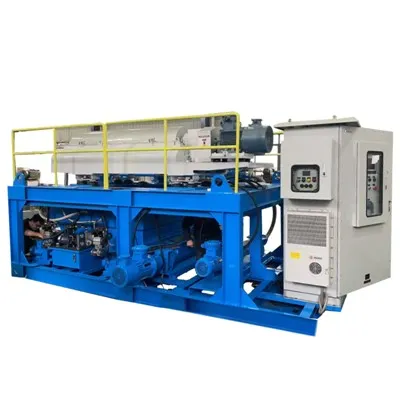
As a supplier of sludge centrifuges, I’ve encountered numerous customers who have faced challenges related to large – sized particles in their sludge. These particles can cause significant issues in the proper functioning and longevity of sludge centrifuges. In this blog, I’ll share my insights on how to effectively deal with these large – sized particles before introducing the sludge into the centrifuge. Sludge Centrifuge
The Problem Posed by Large – Sized Particles
Large – sized particles in sludge can have several detrimental effects on a sludge centrifuge. Firstly, they can cause excessive wear and tear on the centrifuge’s moving parts. The high – speed rotation within the centrifuge means that these large particles act like abrasives, quickly wearing down components such as the screw conveyor, the bowl, and the bearings. This not only leads to frequent breakdowns but also increases maintenance costs and reduces the overall lifespan of the centrifuge.
Secondly, large particles can cause blockages in the centrifuge. These blockages can disrupt the continuous flow of sludge through the machine, leading to reduced efficiency and potentially causing the centrifuge to shut down. In extreme cases, blockages can even cause irreversible damage to the equipment.
Pre – Treatment Methods
To prevent these problems, it’s crucial to pre – treat the sludge to remove large – sized particles before it enters the centrifuge. Here are some effective pre – treatment methods:
Screening
Screening is one of the most common and straightforward methods for removing large – sized particles from sludge. It involves passing the sludge through a screen with a specific mesh size. The screen acts as a physical barrier, allowing only particles smaller than the mesh size to pass through while retaining the larger particles.
There are different types of screening equipment available, such as static screens, vibrating screens, and rotating screens. Static screens are simple and relatively low – cost, making them suitable for applications with low – volume sludge flow. Vibrating screens, on the other hand, use vibration to enhance the screening process, which can improve the efficiency of particle removal, especially for sticky or thick sludge. Rotating screens are often used in high – volume industrial applications, as they can handle large amounts of sludge and provide a continuous screening process.
When selecting a screen for sludge pre – treatment, it’s important to consider the particle size distribution of the sludge, the flow rate, and the nature of the sludge (e.g., stickiness, corrosiveness). The mesh size of the screen should be chosen based on the maximum particle size that the centrifuge can tolerate.
Gravel Bed Filtration
Gravel bed filtration is another effective method for removing large – sized particles from sludge. In this process, the sludge is passed through a bed of gravel or other porous media. The gravel acts as a filter, trapping the large particles as the sludge passes through.
The effectiveness of gravel bed filtration depends on several factors, including the size and shape of the gravel particles, the depth of the gravel bed, and the flow rate of the sludge. A well – designed gravel bed filter can remove particles ranging from a few millimeters down to several microns in size.
One of the advantages of gravel bed filtration is that it can also remove some of the finer particles and colloidal matter in the sludge through a process called adsorption. However, the gravel bed needs to be periodically cleaned or replaced to maintain its filtration efficiency.
Hydrocyclone Separation
Hydrocyclone separation is a more advanced method for particle separation in sludge pre – treatment. It uses centrifugal force generated by a high – speed swirling flow within a hydrocyclone to separate particles based on their size and density.
In a hydrocyclone, the sludge is fed tangentially into the top of the cyclone. The swirling motion causes the larger and denser particles to move towards the outer wall of the cyclone and be discharged through the bottom outlet (the underflow), while the smaller and less – dense particles and the liquid phase are collected through the top outlet (the overflow).
Hydrocyclone separation is a continuous process and can handle high – volume sludge flow. It is particularly effective for separating particles in the range of 10 – 100 microns. However, it requires a relatively high – pressure feed to generate the necessary centrifugal force, and the performance of the hydrocyclone can be affected by factors such as the particle size distribution and the viscosity of the sludge.
Monitoring and Optimization
Once a pre – treatment system is in place, it’s important to monitor its performance regularly to ensure that it is effectively removing large – sized particles from the sludge. This can be done by analyzing the particle size distribution of the sludge before and after pre – treatment using techniques such as sieving or laser diffraction.
Based on the monitoring results, the pre – treatment system may need to be optimized. For example, if the screen is becoming clogged too frequently, the mesh size may need to be increased or the cleaning frequency of the screen may need to be adjusted. If the hydrocyclone is not achieving the desired separation efficiency, the operating parameters such as the feed pressure and flow rate may need to be optimized.
Collaboration and Consultation
As a sludge centrifuge supplier, I understand that each customer’s situation is unique. The type of sludge, the flow rate, and the specific requirements of the centrifuge can vary greatly from one application to another. That’s why we offer our customers not only high – quality sludge centrifuges but also comprehensive pre – treatment solutions.
Our team of experts can work closely with you to assess your sludge characteristics, recommend the most suitable pre – treatment methods, and help you design and optimize a pre – treatment system that meets your specific needs. Whether you are dealing with industrial sludge from a mining operation, municipal sewage sludge, or sludge from a food processing plant, we have the knowledge and experience to provide you with the best solutions.
Conclusion
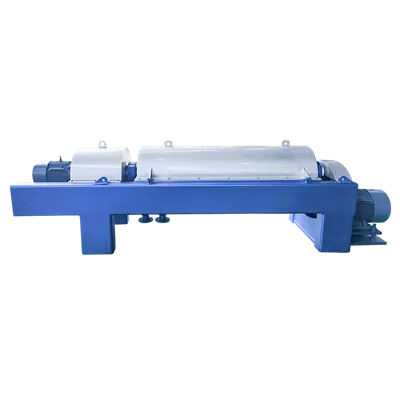
Dealing with large – sized particles in sludge before using a sludge centrifuge is essential for ensuring the efficient and reliable operation of the centrifuge. By using appropriate pre – treatment methods such as screening, gravel bed filtration, and hydrocyclone separation, and by regularly monitoring and optimizing the pre – treatment system, you can significantly reduce the problems caused by large particles in the centrifuge.
3 Phase Decanter Centrifuge If you are looking for a reliable sludge centrifuge supplier or need advice on sludge pre – treatment, we are here to help. Our commitment to providing high – quality products and excellent customer service makes us the ideal partner for your sludge treatment needs. Contact us today to discuss how we can assist you in optimizing your sludge treatment process.
References
- Metcalf & Eddy, Wastewater Engineering: Treatment and Reuse, McGraw – Hill, 2014.
- Tchobanoglous, G., Stensel, H.D., & Tsuchihashi, R., Wastewater Engineering: Treatment, Disposal, and Reuse, Pearson Education, 2004.
- Drake, S. R., "Sludge Dewatering Handbook", IWA Publishing, 2003.
Lishui Yuanrong Environmental Protection Equipment Co., Ltd.
As one of the most professional sludge centrifuge manufacturers and suppliers in China, we have world-leading production equipment and strong manufacturing capabilities. Please feel free to buy customized sludge centrifuge from our factory. Also, quotation is available.
Address: Lot 6-1, Block 15, Wanyang Zongchuang City, Lishui, Zhejiang, China
E-mail: 361184920@qq.com
WebSite: https://www.yrhdc.com/
