Hey there, fellow car owners and mechanics alike! If you’ve ever spent any time under a vehicle (or even just felt a weird shake when driving), you’ve probably heard of a control arm—wait, maybe you just called it that metal piece connecting the frame to the wheel hub. Either way, I’m Alex, and I run a control arm supply company. For over a decade, we’ve shipped parts to repair shops, DIYers, and even big auto brands, so I’ve seen more bad control arms than I can count. Today, let’s cut the fancy jargon and break down exactly how to tell if your control arm needs to get swapped stat—no guesswork, no confusing charts, just real stuff we’ve picked up on the job. Control Arm
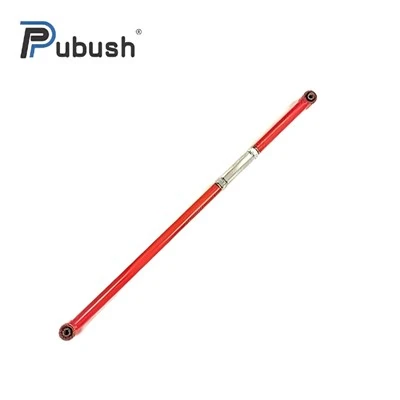
First off, what even is a control arm? Let’s keep this simple: it’s that L-shaped (or sometimes straight) metal link that keeps your wheel moving in a straight line with the chassis. It’s got bushings on one end to soak up bumps and a ball joint on the other to let the wheel turn. Think of it like the shoulder of your car’s suspension—if your shoulder hurts, you can’t move your arm right, right? Same idea. A worn or broken control arm doesn’t just cause a minor annoyance; it’s a safety hazard. I’ve had mechanics tell me about cars where the control arm split while going 70 on the highway—terrifying stuff.
So, how do you spot the red flags before it gets to that point? Let’s start with the easy, at-home checks you can do right now, no tools needed (well, maybe a floor jack and a pry bar, but nothing fancy).
First up: steering and handling feels off. If you’re driving straight and your car pulls to one side without you touching the wheel, that’s a big one. I’m not talking about a little pull from uneven tire pressure—this is a persistent pull, even after you adjust your tires. Or if your steering wanders, like you have to constantly correct the wheel to stay in your lane? That’s the control arm’s job failing. A bad bushing or bent arm can throw off your alignment, which messes with how the wheel sits. Another one: if your car drifts or feels “loose” when you take a turn, especially a sharp one. That’s the control arm not holding the wheel tight, so it shifts instead of staying in place. We’ve had customers come in saying their felt like the front end was “floating” around corners—9 times out of 10, that’s a control arm issue.
Next, the shake. If you’re going over 50 mph and your steering wheel vibrates so bad you can feel it in your hands, don’t just blame the tires. Tires cause vibration, but if balancing them doesn’t fix it, check the control arm. The shake might get worse when you hit bumps or turn. Another shake spot: the floorboard. If the whole front end shakes so hard you can feel it through the gas pedal, that’s usually a ball joint or a control arm bushing gone bad. I’ve seen people replace tires, brake pads, even wheel bearings, and the shake was still there—turns out it was a worn control arm. Don’t waste money on unnecessary parts; check this first.
Now, the physical checks you can do yourself. Let’s say you have a jack and jack stands (never use just the jack, seriously—safety first). Pop the front end up and let it rest on the stands so the wheels are off the ground. Grab the top and bottom of the wheel (or left and right, depending on the arm) and wiggle it back and forth. If there’s more than a tiny bit of play—like, if the wheel moves more than half an inch side to side—that’s a sign. Now, that play could be a ball joint, but wait—control arm bushings can cause play too. Bushings are those rubber (or sometimes polyurethane) parts that cushion the arm. If they’re cracked, torn, or squishy, that play will show up. You can also look at the control arm itself: bend it, twist it, check for rust or cracks. Rust is a big one—especially on older cars. If the metal has deep rust pits or a crack that looks like it’s spreading, that’s not a part to fix; you have to replace it. I’ve seen control arms that looked fine on the outside but had a crack running through the middle from rust, so tap it with a wrench—if it sounds hollow or like it’s cracked, don’t take chances.
Another thing: when you go over a speed bump or a big pothole, do you hear a clunking or a knocking sound? That’s a classic control arm symptom. The bushing is worn out, so the metal parts are banging against each other instead of the rubber cushioning them. I’ve had customers say it sounds like a bunch of rocks bouncing under the car, but it’s just a loose control arm. If the clunking gets louder when you turn or accelerate, that’s even more likely to be the control arm. Also, if you hit a big pothole and the clunk starts after that, that’s probably when the damage happened—don’t ignore that new noise.
Wait, what about rear control arms? A lot of people only think about front ones, but rear control arms do the same job for the back wheels. If your rear end feels like it slides when you brake, or you get uneven tire wear on the back tires, that could be a rear control arm. Uneven tire wear is a huge hidden sign—if one edge of your rear tires is wearing way faster than the other, don’t just rotate them; check the control arm. A worn bushing can throw the rear wheel out of alignment, leading to that kind of wear.
Now, let’s talk about when it’s actually urgent. Not all control arm issues are the same. If you notice any of these, don’t wait for your next oil change—get it replaced in the next day or two: 1) The car pulls sharply to one side and the steering is hard to control. 2) You have a vibration that gets worse at highway speeds, no tire balance fix. 3) There’s a loud clunk when going over small bumps, and the wheel has a lot of play. 4) You see a crack or rust on the control arm, or a torn bushing. Why rush? Because a failing control arm can cause the wheel to separate from the suspension while driving. That’s not just unsafe for you—you’re a hazard to other drivers too. We had a guy come in last year whose control arm completely split on the highway; he swerved into the other lane and hit a guardrail. The repair cost way more than if he’d just replaced the arm early.
What about if you’re not sure? Don’t guess. A lot of shops will do a free suspension check—take it there, but be honest about what you’re feeling. If you’re a DIYer, don’t try to fix a bad control arm with a kit or a patch. Those are temporary fixes at best. Control arms are load-bearing parts; you need a solid, new one to keep your car safe.
Now, a word from our side (the control arm suppliers). We get questions all the time: “Should I get a aftermarket or OEM control arm?” Here’s the thing—OEM is made by the original car company, so it’s exact fit, but it’s often more expensive. Good aftermarket control arms (that’s us, by the way) are made with the same metal and bushings, sometimes even better polyurethane bushings that last longer. We test every arm we ship to make sure it can handle the weight of your car and the bumps of the road. So if you’re replacing, make sure you get the right part for your make and model—double-check the year, engine size, and whether it’s front or rear, driver or passenger side.
Now, let’s wrap this up. The main signs to remember: persistent pulling, weird vibration, clunking noises, excessive wheel play, visible rust or cracks, and uneven tire wear. If you have any of these, don’t put it off. Control arms might not be the most glamorous part of your car, but they’re one of the most important for safety.

If you’re a mechanic needing bulk parts, a DIYer picking up a part for your garage, or just someone who wants to make sure your car is safe, reach out to our team to chat about what you need. We can help you find the right control arm at a price that works, and even answer questions about installation if you’re tackling it yourself. Don’t wait till it’s a big problem—fix it now, stay safe, and keep your car running right.
Suspension Systems By Model References
- National Highway Traffic Safety Administration (NHTSA) Vehicle Safety Recalls Database
- Automotive Repair Institute (ARI) Suspension Component Service Guidelines
- Control Arm Engineering Association (CAEA) Load-Bearing Part Standards Manual
Xingtai Refined Machinery and Auto Accessory Co., Ltd.
Xingtai Refined Machinery and Auto Accessory Co., Ltd. is one of the most professional control arm manufacturers and suppliers in China, featured by quality products and low price. Please rest assured to wholesale durable control arm made in China here from our factory. Customized orders are welcome.
Address: XINGTAI REFINED MACHINERY AND AUTO ACCESSORY CO., LTD507 NORTH TAIHANG ROAD, XINGTAI CITY, HEBEI PROVINCE, PR.
E-mail: lindy@rfauto.biz
WebSite: https://www.pubush-suspension.com/
