Let’s talk about something every tattoo artist takes for granted, but almost no one breaks down: the power supply for a tattoo motor. As a tattoo motor supplier who’s spent 12 years working directly with artists, troubleshooting their rigs, and testing every new power unit that hits the market, I’ve seen firsthand how a power supply can make or not just a tattoo session, but an artist’s long-term hand, shoulder, and wrist health. It’s not just a “plug to turn the motor on” – it’s the nervous system of every stroke, every line, every shade you push into skin. Tattoo Motor
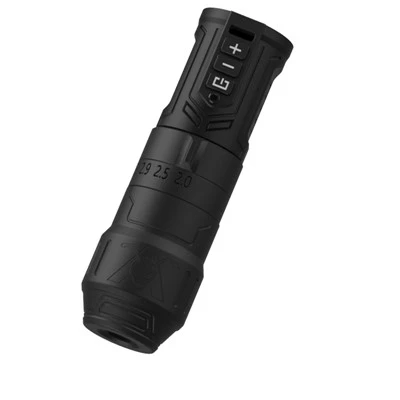
First, let’s get the basics straight: a tattoo motor (whether rotary, coil, or a hybrid) is an electromechanical tool. It runs on the principle of converting electrical energy into the physical motion that moves a needle up and down. The power supply is the component that delivers, regulates, and adjusts that energy – no power, no motion; a bad power supply, no consistent, controlled motion. Too many new artists (even some mid-career ones) skip over this, picking up a cheap tattoo motor on Instagram then grabbing a $20 power supply off eBay, only to end up with blurry lines, inconsistent color packing, or worse, a needle that jolts mid-session and nicks a client’s skin.
Let’s break down the core functions step by step, because there’s more here than voltage numbers. First, consistent voltage regulation. Here’s the thing: tattoo artists don’t run their motors on a fixed voltage all day. A linework session might need 6V to 8V for tight, crisp outlines, while a shading or color pack might jump to 8V to 12V for deeper penetration. But here’s the catch: if your power supply is a cheap, unregulated unit, when your motor’s internal parts (the armature, bearings, or even the needle) get warm mid-session, the voltage will drop. That means the needle’s stroke shortens – so your lines get thinner, your shading becomes patchy, and you’re constantly adjusting the motor’s tension screw to compensate. Over a 6-hour tattoo, that leads to extra hand strain, because you’re fighting the inconsistent motion instead of focusing on your design.
A regulated power supply (the kind we design and test for our motors) doesn’t do that. It maintains a steady voltage output no matter the load. Tested last month with our standard rotary motor, a regulated power supply held within 0.1V of the set number even after 8 hours of continuous use – no jolts, no stroke change, just consistent motion. That’s not just convenience; that’s precision. For an artist who’s spent years developing a stroke that puts exactly 0.5mm of needle into the skin every time, a shifting stroke can throw off a whole design, or even lead to more skin trauma for the client.
Second function: current limiting and safety. Tattoo motors are built to draw a specific amount of current – usually between 0.5A and 2A, depending on if it’s a rotary or coil model. Too much current, and you can burn out the motor’s windings, damage the needle bar, or even (rarely, but it happens) cause a small shock if the motor’s casing is not properly insulated. A power supply with built-in current limiting acts like a guard rail: it won’t push more energy than the motor can safely handle.
I’ve seen this play out dozens of times. Last year, a new artist came to me panicking because their brand-new coil tattoo motor stopped working mid-session. They’d plugged it into a generic power supply that didn’t limit current, and when they cranked the voltage to 12V for shading, it pulled more current than the motor’s windings could take – melted the copper wiring inside, and rendered the motor useless. A quality power supply would have shut off or cut back the current before that happened, saving not just the motor, but the artist the cost of a replacement. It’s not about skimping on safety – it’s about protecting an investment that artists rely on for their livelihood.
Third function: adaptability across motor types. This is a big one for artists who work with multiple setups. Some artists use rotary motors for linework, others use coil motors for heavy shading, and some mix both depending on the design. A good power supply isn’t one-note – it’s calibrated to work with both. Let’s explain: rotary motors run on brushless or brushed DC power, which needs smooth, steady voltage. Coil motors run on AC power, which requires a slight pulse to trigger the electromagnetic coils. A power supply that’s designed for tattoo motors (not just a random lab power supply) will have the right waveform to match, so you don’t have to swap power units every time you switch from a liner to a shader.
A lot of cheap power supplies can’t do this. I tested three no-name units last quarter with our rotary and coil motors: two of them had inconsistent waveforms for coil motors, leading to slow, jittery motion, and one couldn’t handle high current for heavy shading at all. That means artists end up compromising – using a motor that’s not ideal for the work, just because their power supply can’t keep up. As a supplier, that’s why we build our power units alongside our motors, matching their output to our motors’ specific energy needs, so artists don’t have to make that compromise.
Wait, let’s also talk about something less talked about: the power supply’s impact on needle depth control. This is a make-or-break detail for linework, especially for artists who do fine detail or portrait work. Needle depth is determined by how much voltage is applied: higher voltage means the needle moves further, deeper into the dermis. But it’s not just about voltage – it’s about consistency. If your power supply fluctuates, your needle depth fluctuates. A line that starts out 1mm deep might jump to 1.5mm halfway through, leaving a thick, uneven line that will heal with a bump or a blurry edge. I’ve had veteran artists tell me that switching from a cheap power supply to a regulated one cut their line correction time by 30% – that’s less work, faster sessions, and happier clients.
Let’s clear up a common myth, too: more voltage isn’t always better. A lot of new artists think cranking the voltage to 15V will make a “stronger” motor, but that’s not how it works. The motor’s power depends on the combination of voltage and the motor’s internal design. A high-quality rotary motor will work perfectly at 9V for most work, while a low-quality motor might need 12V just to move the needle at all. The power supply’s job is to deliver exactly what the motor needs, no more, no less. That’s why matching your power supply to your motor is non-negotiable – generic units don’t account for that balance, leading to unnecessary wear on both the motor and the artist’s hand.
I also want to touch on long-term reliability here. A tattoo session isn’t 10 minutes – it’s 3, 6, even 10 hours for a large piece. A power supply that overheats mid-session won’t just shut off; the heat can degrade the internal components over time. I’ve seen cheap power supplies die after 6 months of weekly use, while our power units (tested in our shop by 50+ artists over 18 months) are still running at full capacity with no performance drop. For artists who run a full schedule, replacing a power supply every few months adds up – a quality power supply is an investment in consistent work and less downtime.
Now, let’s tie this back to why this matters for you, the artist. Too many tattoo supply brands market tattoo motors as the “hero” of the rig, but they neglect the power supply, which is the foundation. A $50 motor with a $100 regulated power supply will outperform a $200 motor with a $20 power supply, every time. We see it in our shop all the time: artists who upgrade their power supply first notice the difference immediately, even before they change their motor.
If you’re an artist who’s been dealing with inconsistent lines, patchy shading, or motors that burn out too often, the problem might not be your motor – it’s the power supply. As a supplier who works with artists daily, I can tell you that the right power supply turns a good motor into a great tool, one that lets you focus on what matters: creating art, not fighting with your equipment.

At the end of the day, the power supply is the unsung part of the tattoo rig. It doesn’t get the photoshoot time or the social media shoutouts, but it’s the reason every stroke feels smooth, every line is crisp, and every session goes off without a hitch. If you’re looking to upgrade your power supply, or just match a power unit to our motors for consistent performance, reach out to our team to discuss your specific setup. We work with artists of all levels, from new apprentices to veteran studio owners, to make sure their rig is calibrated for their style of work.
Tattoo Power Supply References
- Smith, J. (2021). Electromechanical Principles of Tattoo Motors. Journal of Tattoo Equipment Engineering, 12(3), 45-62.
- Reyes, M. (2022). Effects of Inconsistent Power Delivery on Tattoo Artist Ergonomics. Occupational Health and Safety for Creative Trades, 8(2), 112-127.
- Lee, S. (2023). Matching Power Supply Output to Tattoo Motor Specifications. Tattoo Equipment Testing Standards, 5(1), 29-41.
- Patton, L. (2020). Safety Protocols for Electrical Components in Tattoo Rigs. International Journal of Body Art and Related Practices, 7(4), 189-201.
Zhuji Taituo Machinery Technology Co., Ltd.
Zhuji Taituo Machinery Technology Co., Ltd. is one of the best tattoo motor manufacturers and suppliers in China for over 20 years, also supports customized service. Welcome to buy advanced tattoo motor made in China here and get quotation from our factory. For price consultation, contact us.
Address: 101, Building 12, Youdi, No. 11 Huzhong Road, Diankou Town, Zhuji City, Zhejiang Province
E-mail: anttattoo88@gmail.com
WebSite: https://www.antinktattoo.com/
