If you’ve ever walked into a food processing plant mid-production, you know how critical it is for every piece of equipment to work in lockstep. A line that stutters because a new machine doesn’t mesh with existing conveyors, fillers, or packaging systems can cost thousands of dollars in downtime every hour. As a salt filler machine supplier, I hear this question every single day: Can a salt filler machine actually integrate with my current production line? The short answer? Yes—but only if you approach the process with both science and practical plant floor know-how in mind. Let’s break down why integration is not just possible, but often a game-changer for efficiency, and what you need to get it right. Salt Filler Machine
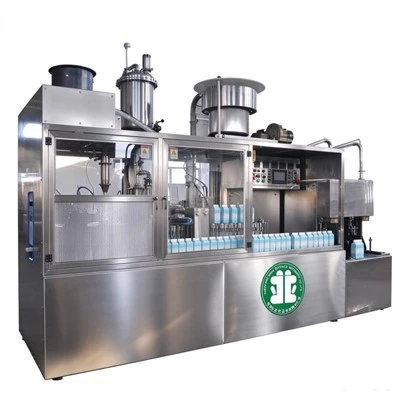
First, let’s ground this in the realities of salt processing lines. Salt isn’t a static product; it’s a free-flowing, abrasive material with variable particle sizes—from fine table salt to coarse kosher salt or flaked sea salt. Your existing line was built to handle whatever form of salt you use, plus secondary packaging steps like filling into bags, jars, or cartons, and even metal detection or checkweighing. A salt filler machine, when integrated properly, shouldn’t force you to replace that entire setup—it should work with it.
I’ve seen two common scenarios where integration succeeds, and one where it fails. The successes always start with auditing the existing line first. Last year, a craft salt producer in Vermont reached out to me. Their current line included a manual bagging station that was limiting them to 20-pound batches, with 15 minutes of downtime every time workers switched between fine and coarse salt. They wanted to add an automatic salt filler to boost output, but they worried the filler’s conveyor would mismatch their existing 120-foot per minute (fpm) infeed speed. We didn’t just pull a filler off the shelf and ship it. We sent a technician to measure their line’s infeed and outfeed clearances, test the salt’s flow rate, and even sample their packaging bags to confirm dimensions.
The key here is that salt fillers are not one-size-fits-all. Modern salt filler machines are designed with modular interfaces—standardized mounting brackets, encoder inputs, and communication protocols that speak to most industrial line controllers. For the Vermont plant, we used a model with a variable-speed infeed conveyor that could sync directly to their existing PLC (programmable logic controller) via Ethernet/IP, a common protocol used in food processing. Instead of forcing them to upgrade their entire line, our technician adjusted the filler’s speed to match their 120 fpm infeed, added a small bridging hopper to fit their existing conveyor, and trained their team to sync the filler’s start/stop with their packaging machine. The result? They cut downtime for product changes by 75% and boosted output by 40%—all without replacing their existing equipment.
Now, the most common misconception I encounter is that integration requires retrofitting existing machines with custom parts. While customizations are sometimes needed, they’re rarely the first step. Most food processing lines operate on core mechanical and electrical standards that salt fillers are built to comply with. For example, food-grade stainless steel construction is non-negotiable for salt processing (salt is corrosive, and food safety regulations like FSMA require easy-to-clean surfaces), so our fillers are built to meet that standard, which means they’ll mount to most existing line frames without modification. Electrical compatibility is another big one: our salt fillers come pre-wired with both 110V and 220V options, and support for Modbus, Profinet, and Ethernet/IP protocols, so they can talk to any line controller most plants already use.
That said, integration isn’t just about mechanical fit—it’s about flow consistency. Salt can be tricky because fine salt can create dust, while coarse salt can jam conveyor belts if not handled properly. When integrating a salt filler, you have to account for the material’s behavior in your existing line, not just the machine itself. A friend who runs a large seasoning plant in Ohio told me a story about a salt filler they bought three years ago that didn’t integrate because they skipped the flow test. Their existing line fed salt via a gravity chute, but the new filler’s augur system required a steady, pressurized feed to avoid overfilling. Without adjusting the chute’s size and adding a small vibrator to prevent salt bridging in the hopper, the filler would jam every 20 minutes, bringing the line to a halt. We were able to come in later, add the vibrator and adjust the chute, and it worked seamlessly. That fix cost a fraction of what it would have to replace the entire line.
Another angle to consider is line expansion. If your existing line is running at 80% capacity, integrating a salt filler can help you hit full capacity without rebuilding your entire process. Let’s do a quick math check: a standard manual line for salt packaging might have one worker filling jars at 60 jars per minute. An integrated automatic salt filler can handle 120 jars per minute, doubling output. But if your packaging machine can only run at 90 jars per minute, you don’t need a filler that runs at 120—you can opt for a lower-speed model that syncs to your packaging machine’s rate, avoiding overproduction and wasted product. That’s where working with a salt filler supplier who understands line dynamics makes all the difference. We don’t just sell machines; we help you size the right filler for your existing line’s maximum capacity, so you don’t waste money on over-spec’d equipment.
Food safety is another critical factor in integration, and it’s something we prioritize. Your existing line likely already has protocols for cleaning, allergen control, and traceability. A salt filler machine must align with these to avoid cross-contamination and meet regulatory requirements. For example, if your line is used for both table salt and a salt-based seasoning with allergens, the filler must have a design that allows for quick, tool-free cleaning (no hidden crevices where salt can accumulate) and a way to track batch numbers through the filler, so you can trace any product issues back to the machine. Our salt fillers have CIP (clean-in-place) compatible designs, which means they can be connected to your existing line’s CIP system without modification, ensuring compliance with FDA and EU food safety standards.
Now, what if your line is older—say, 15 or 20 years old, with a controller that’s outdated or uses a proprietary protocol? That’s not a dealbreaker, but it does require a bit more planning. We’ve integrated salt fillers with lines that use legacy PLCs, like Siemens S7-300 or older Allen-Bradley systems. In those cases, we use a protocol converter module that acts as a bridge between the filler’s modern communication and the old line’s controller. It’s a simple, low-cost add-on that lets the filler sync with the existing line without replacing the entire control system. Last year, a small salt packing company in Michigan with a 1998 line used this method, and it saved them over $50,000 compared to upgrading their controller.
Of course, there are times when full integration isn’t the best option—but that’s rare. We only recommend replacing existing equipment if it’s completely non-compliant, or if the cost of integrating a filler is higher than upgrading the line. For example, a plant that still uses a manual scale for salt that’s prone to errors might benefit more from upgrading to an integrated line than retrofitting a filler around an inaccurate scale. But even in those cases, we work with our customers to weigh the costs and benefits.
The takeaway here is that integrating a salt filler machine with your existing line is not only possible—it’s a smart investment for most food processing plants. It boosts output, reduces downtime, improves product consistency, and maintains compliance with food safety regulations. But it’s not a “plug and play” process; it requires careful auditing of your existing line, understanding of your salt’s properties, and working with a supplier who knows both salt processing and line integration.
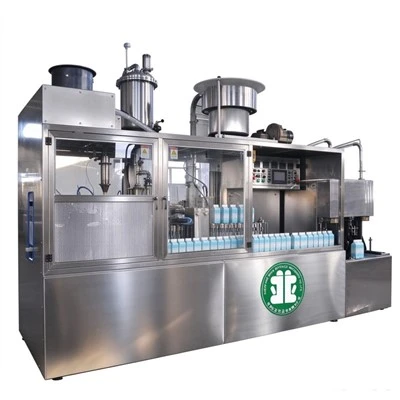
If you’re ready to explore how a salt filler can work with your line, we’re here to help. We’ll send a technician to assess your setup, test your salt’s flow, and provide a customized proposal that fits your budget and production goals. No one-size-fits-all solutions, no hidden costs, just practical advice based on years of working with salt processing plants across the country. Reach out to us to start the conversation, and let’s make your production line work better for you.
Salt Filler Machine References
- Food and Drug Administration (FDA). (2022). Food Safety Modernization Act (FSMA): Preventive Controls for Human Food. U.S. Department of Health and Human Services.
- European Food Safety Authority (EFSA). (2021). Scientific Opinion on Food Safety of Food Additives. EFSA Journal.
- Industrial Plant Engineering Association (IPEA). (2020). Modular Equipment Integration for Food Processing Lines. IPEA Technical Report.
- Salt Institute. (2019). Salt Processing and Handling Guidelines for Food Manufacturers. The Salt Institute.
- International Society of Automation (ISA). (2021). Protocols for Industrial Line Communication in Food Processing. ISA Standards and Practice Council.
Shenyang Beiya Beverage Machinery Co., Ltd.
With abundant experience, we are one of the most professional salt filler machine manufacturers and suppliers in China. If you’re going to buy customized salt filler machine made in China, welcome to get quotation from our factory. For price consultation, contact us.
Address: No.2-1, Tongling Street, Yuhong District, Shenyang City, Liaoning Province, China
E-mail: market@sybeiya.com
WebSite: https://www.chinafilling.com/
