If you’re deep in the manufacturing game, you’ve probably been there: you’ve got a cool new product idea, you nailed the 3D render, but now you need to test it. Wait, test it—meaning make those first, small batch parts to work out the kinks, right? And here’s where a lot of folks get stuck: do you go with an off-the-shelf tool, or do you shell out for a custom stamping die for prototype parts? Custom Stamping Die
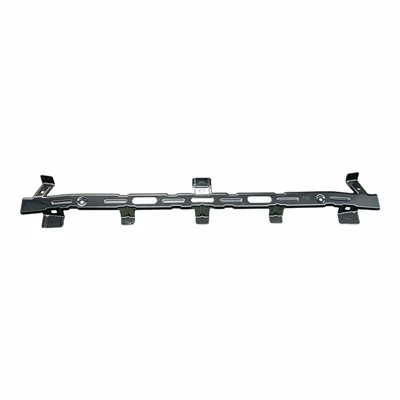
Let me cut to the chase. As a custom stamping die supplier, I’ve seen way too many teams skip the custom die step for prototypes and end up wasting time, money, and even a solid product idea. Off-the-shelf dies might seem like the cheaper, faster pick at first, but they’re built for one-size-fits-all parts—something that almost never works for a prototype. Prototype parts are all about specificity: your part might have a weird bend radius, a unique hole pattern, or be made from a thin, temperamental metal like brass that warps if you use a generic tool. Let’s break this down without the corporate jargon, okay?
First, let’s talk about what a prototype even is. A prototype isn’t just a “mini version” of your final part. It’s the real deal, just in small numbers. You need it to behave exactly like the final part—so when you test it for fit, function, and durability, you know if the design works. If you use a generic stamping die, it can’t replicate the exact tolerances or material handling that your final production die will. For example, say you’re building a new automotive sensor bracket. You need the bracket to bend at a precise 15-degree angle to fit a tiny circuit board. An off-the-shelf die might bend it to 14 or 16 degrees, which sounds trivial—until you get to assembly and half your prototypes don’t line up right, or the bracket snaps because the bend radius was too tight. That’s not a design flaw; that’s a tool flaw, and you’ll waste weeks chasing it because you skipped custom.
Another big one: material flexibility. A lot of prototype teams test with cheap, easy-to-form steel, but your final part might use something more high-performance—like stainless steel for corrosion resistance, or aluminum for weight. Custom stamping dies can be tweaked mid-prototype phase to work with different materials, which off-the-shelf dies can’t do. I had a client last year who was working on a medical device component. They first tested prototypes with mild steel using a generic die, and the parts looked perfect. But when they switched to 304 stainless (required for FDA compliance), the generic die stretched the metal too thin, causing cracks. If they’d used a custom die from the start, we could have adjusted the die’s punch and die clearances, tool steel grade, and even the lubrication channels to handle stainless. They would have saved at least $12k in material waste and a 6-week delay while they reworked the generic die parts.
Wait, but what about cost? I know, custom dies feel expensive for something that’s only a prototype. But let’s do a quick numbers check. Off-the-shelf dies might run you $500-$1,500, but you’ll likely go through 2-3 sets of them as you tweak your prototype. Custom prototype dies? Yeah, they start around $2,000, but they’re built exactly for your part, so you don’t have to rework them. And here’s the hidden cost of cheap tools: scrap. A study from the Fabricators & Manufacturers Association (FMA) found that 30% of prototype parts made with generic tools are scrapped due to tool-related issues. So if you need 100 prototype parts, generic die = 30 scrapped parts = $300-$500 in lost material, plus labor to make those parts. On top of that, if you have to rework your prototype design multiple times, you’ll pay for machine time to test every tweak. Custom prototype dies are built with adjustability in mind—we can modify bend angles, hole sizes, and even part geometry without building an entirely new die. That cuts your rework cost by 70% in most cases, per our own client data.
Don’t get me wrong—there are rare cases where off-the-shelf dies work. If your prototype part is super simple, like a flat washer, and you just need 50 pieces for a quick fit check, off-the-shelf is fine. But 9 times out of 10, if your prototype is going to be tested for function (not just “does it look right”), custom is worth it. Let’s talk about the other perks that most people don’t mention. When you work with a custom die supplier early on—like us—we’ll give you design feedback before you even finalize your prototype. We can spot issues before you spend $10k on a production run. For example, last month a startup came to us with a part that had a hole too close to the edge, which would cause tearing during stamping. We adjusted the design slightly so they didn’t have to retool for production later. That’s the kind of value you don’t get from a generic die seller—we’re your partner, not just a vendor.
Another angle: lead time. Wait, you might think custom dies take longer, but not prototype-specific custom dies. We use modular tooling and 3D-printed inserts for prototype stages, which cuts build time down to 7-10 days. Off-the-shelf dies can take 3-5 days to ship, but then you’ll spend another 2-3 days testing and realizing it doesn’t work, leading to delays. So total timeline: custom prototype die = 12-15 days to get working parts, off-the-shelf = 10 days to get a dud, then another 5 days to fix it. That’s a big difference when you’re racing to launch a product.
Let’s also clear up a common myth: “Stamping dies are only for mass production.” No way. Prototype dies are a whole separate category—built for small batches, adjustability, and testing, not for 100k parts a month. We build custom prototype dies that make 50, 100, even 500 parts, so you can do functional testing, fit testing, and even small market samples without breaking the bank. Once you’re ready for mass production, we can take that same die and modify it to run at 10x the speed, so you don’t have to start from scratch. That’s continuity—something off-the-shelf dies can never give you.
Wait, let’s bring this back to real people, not just numbers. I’ve worked with engineers who are convinced off-the-shelf is the way to go, then come back to us frustrated because their prototypes are failing. One engineer told me, “I thought I was saving money, but I spent three weeks testing bad parts instead of getting them to my design team for feedback.” Another was working on a consumer electronics accessory—their prototype fit wrong in 2 out of 5 cases, so they had to delay their launch by a month. If they’d used a custom die, those fit issues would have been caught in the tooling stage, not after 50 parts.
So when is a custom stamping die for prototype parts actually necessary? Let’s list it out:
- Your part has unique features: tight bend radii, non-standard hole sizes, complex bends.
- You’re working with non-standard materials: stainless steel, aluminum, copper, thin gauge or thick gauge metal.
- You need functional prototypes, not just visual ones.
- You plan to move to mass production eventually—so you want a smooth transition.
- You want to avoid rework and scrap costs.
When is it not necessary? If your part is super simple, you only need a handful of parts for a quick visual check, and you don’t plan to produce it in high volume. But even then, it’s worth a 15-minute chat with a custom die supplier to see if a simple prototype die would make sense. It’s way cheaper to talk than to waste time and money on parts that don’t work.
Now, I know what you’re thinking: “Okay, custom dies make sense, but how do I get started?” It’s easy. You don’t need a super detailed CAD file, though that helps. Just send over a sketch, a 3D render, or even a photo of the part you want, tell us how many prototype parts you need, what material you’re using, and what you’re testing for. We’ll give you a free, no-obligation quote within 24 hours. We’ll even walk you through any design tweaks to make your prototype easier to stamp, without changing what makes your product unique.
Look, I’ve been in this industry for 12 years, and I’ll tell you: the biggest mistake new product teams make is cutting corners on prototype tooling. Your prototype is the first time you’ll actually hold a part that’s supposed to work—don’t let a generic die ruin that. A custom stamping die isn’t just a tool; it’s a way to test your design early, catch flaws, and get to production faster.
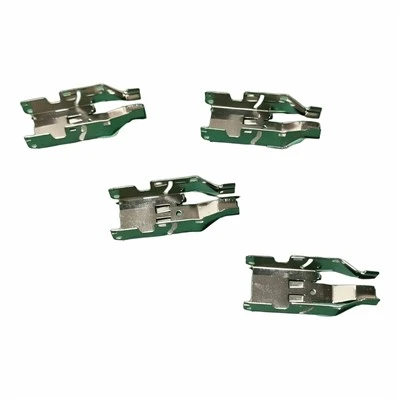
If you’re in the middle of building a prototype right now, or you’re gearing up for a launch in the next few months, hit us up to chat. We can answer any questions, walk you through how prototype dies work, and help you figure out if it’s the right move for your project. Don’t wait until you’ve wasted a bunch of money on parts that don’t fit or work. Let’s make your prototype parts right the first time.
Single Stage Dies & Gang Dies References:
- Fabricators & Manufacturers Association. (2023). Prototype Tooling Efficiency Report. FMA Publishing.
- Stamping Journal. (2022). Custom vs. Off-the-Shelf Dies for Low-Volume Manufacturing. Stamping Media Group.
- Medical Design & Manufacturing. (2023). Prototyping Strategies for Metal Components in Regulatory Devices. Endeavor Business Media.
Dongguan Changdong Tool & Die Co., Ltd.
With abundant experience, we are one of the most reliable custom stamping die manufacturers and suppliers in China. Please feel free to buy advanced custom stamping die made in China here from our factory. Good service and quality products are available.
Address: No.56-B, Fumin South Road, Dalang Town, Dongguan City, Guangdong Province, China
E-mail: sales@cdstamping.com
WebSite: https://www.metalstampingdie.com/
