Hey there! I’m from a rigid PCB supplier, and today I wanna chat about the soldering process for rigid PCBs. It’s a super important part of making these boards work right, and I’m stoked to share all the deets with you. Rigid PCB
The Basics of Rigid PCBs
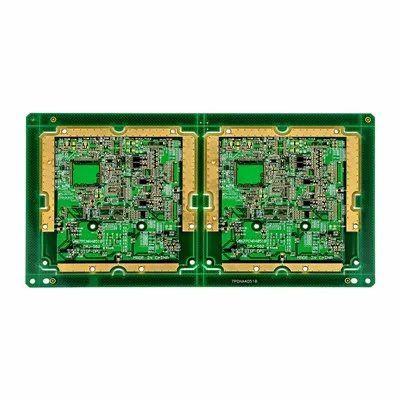
First off, what exactly are rigid PCBs? Well, they are those solid, inflexible circuit boards you find in tons of electronic devices. They’re made of various materials like fiberglass-reinforced epoxy resin, which gives ’em that rigidity. Most of the gadgets we use daily have these rigid PCBs inside, from smartphones to computers and even some home appliances.
Before the Soldering: Preparation
Before we jump into the soldering part, there’s a whole bunch of prep work to do. The first step is PCB design. We’ve got a team of designers who use special software to plan out the layout of the circuit. They decide where all the components are gonna go and how the electrical connections will work. It’s like creating a roadmap for the electrons to follow.
Once the design is finalized, we start manufacturing the PCB. We print the circuit pattern onto the board using a special process. Then we etch away the unwanted copper to leave behind just the circuit lines. After that, we drill holes for the components to be inserted.
The components themselves need to be ready too. We check for any damage and make sure they’re clean. Sometimes, we even have to pre-treat them to improve soldering quality.
Types of Soldering Processes for Rigid PCBs
There are a few different soldering methods we use, and each has its own pros and cons.
Wave Soldering
Wave soldering is a pretty common method. In this process, we first put the components onto the PCB manually or using an automated machine. Then, the board is passed over a wave of molten solder. The wave of solder flows over the bottom of the PCB, creating a connection between the components and the circuit traces.
One of the cool things about wave soldering is that it’s fast. We can solder a whole bunch of PCBs in a short amount of time. But it’s not perfect. Sometimes, there can be issues like solder bridges, which are when the solder connects two adjacent pins that aren’t supposed to be connected. We have to inspect the boards carefully after wave soldering to catch and fix these problems.
Reflow Soldering
Reflow soldering is another important method. First, we apply a solder paste to the PCB. This paste is a mixture of tiny solder particles and a flux. The flux helps clean the surfaces and allows the solder to flow better.
Then, we place the components on top of the solder paste. After that, the PCB goes through a reflow oven. Inside the oven, the temperature is gradually increased. As the temperature rises, the solder in the paste melts and forms a connection between the components and the PCB.
Reflow soldering is great because it gives really precise and reliable connections. It’s especially good for surface-mount components, which are smaller and more delicate. But it can be a bit more expensive than wave soldering because of the equipment needed.
Hand Soldering
We also do hand soldering in some cases. This is usually for prototypes or for fixing any issues that come up after the automated processes. With hand soldering, we use a soldering iron to melt the solder and connect the components. It requires a lot of skill. The person doing the hand soldering needs to have a steady hand and know exactly how much solder to use.
Quality Control During Soldering
Quality control is a huge deal during the soldering process. We have multiple checks in place to make sure everything is up to snuff.
First, we do visual inspections. We check for things like missing components, incorrect component placement, and any visible soldering defects. This is done by trained technicians who have a keen eye for detail.
We also use automated optical inspection (AOI) machines. These machines use cameras and software to quickly scan the PCBs and detect any issues. They can spot things that might be hard for the human eye to catch, like tiny solder balls or misaligned components.
In some cases, we even use X-ray inspection. This is great for checking the quality of hidden solder joints, like those under ball grid array (BGA) components. The X-ray machine can show us what’s going on inside the joint to make sure there are no voids or other problems.
Troubleshooting Common Soldering Problems
Even with all the quality control measures, sometimes soldering problems still pop up. Here are some common issues and how we deal with ’em.
Solder Bridges
As I mentioned earlier, solder bridges are when the solder connects two adjacent pins that shouldn’t be connected. To fix this, we use a desoldering tool to remove the excess solder. It’s a bit like reverse soldering. Once the excess solder is removed, we can check the joint to make sure it’s good.
Cold Solder Joints
Cold solder joints happen when the solder doesn’t melt properly or doesn’t flow well. These joints look dull and grainy instead of shiny and smooth. To fix cold solder joints, we heat up the joint with a soldering iron and add a little more solder if needed. This helps the solder melt and flow correctly, creating a good connection.
Component Damage
Sometimes, components can get damaged during the soldering process. This could be due to overheating or physical damage. If a component is damaged, we carefully remove it and replace it with a new one. This can be a bit tricky, especially with small and delicate components.
Why Our Rigid PCBs Are the Best
We’re really proud of the quality of our rigid PCBs. Our team has years of experience in the soldering process, and we use the latest equipment and techniques.
We pay a lot of attention to detail. From the initial design to the final soldering, we make sure every step is done right. Our quality control measures are top-notch, so you can trust that the PCBs you get from us are reliable and will work well in your electronic devices.
We also offer customization. If you have specific requirements for your PCBs, we can work with you to make it happen. Whether it’s a unique design or special components, we’ve got you covered.
Let’s Talk Business
If you’re in the market for high-quality rigid PCBs, I’d love to chat with you. We can discuss your specific needs, and I can give you more info about our products and services. Whether you need a small batch of prototypes or a large production run, we’re ready to help.
Prototype PCB Assembly Just reach out to us and let’s start the conversation. We’re here to make sure you get the best rigid PCBs for your electronic projects.
References
- “Printed Circuit Board Handbook” by Clyde Coombs
- “Soldering for Electronics” by Mike Tooley
Huaswin Electronics Technology Co., Ltd.
Address: Building A2, Hao Hai Hong Industrial Park, No.3 Yu He Road, Gong He, Sha Jing, Bao An, Shenzhen
E-mail: sales@huaswin.com
WebSite: https://www.huaswin-pcba.com/
