Hey, quick question—when was the last time you stayed late just to manually finish a repetitive, mind-numbing task that even a 5-year-old could learn? If you’re like most small to mid-sized manufacturing or warehouse ops I chat with every week, that’s probably way too often. I’m part of a collaborative robot (cobot) supplier team, and let’s cut the BS—we didn’t get into this because we love fancy tech jargon. We got into it because we’ve seen way too many folks burn out from the stuff no one should be doing by hand, and way too many teams losing output because they’re short-staffed or making too many silly mistakes on repetitive jobs. Today, let’s talk about how cobots actually boost productivity, not just the marketing fluff you see on other sites. Collaborative Robot

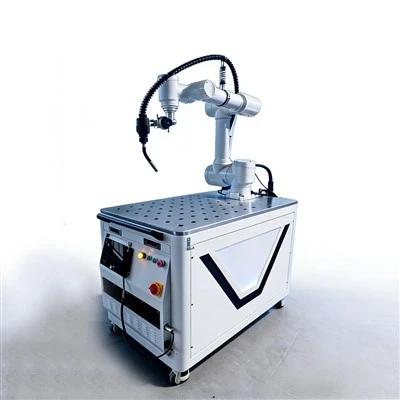
First off, let’s get one thing straight: cobots aren’t here to steal your jobs. That’s the biggest myth we hear, and honestly, it’s frustrating because it misses the whole point. A while back, I worked with a small metal fabricating shop in Ohio that was running two shifts just to keep up with small-batch custom parts. The problem? Their welders were spending 8 hours a day doing the same 6-inch weld on every frame piece. By the end of the shift, they were exhausted, skipping small tasks like checking weld quality, and even missing occasional pieces that delayed the next process. We rolled out a 6-axis welding cobot for that specific repetitive task, and at first, their lead welder Jake was totally on edge. He kept asking, “Am I gonna be replacing this machine by next month?” Three months later, he told me he’s now training new hires on complex welds and quality checks—stuff that used to take senior welders weeks to master. The cobot? It runs 12 hours a day, no breaks, no bathroom trips, no yelling over loud welders, and the shop’s output on those small-batch parts went up 32% in the first quarter. That’s not a robot taking a job—that’s a team getting to do the work that actually adds value, not the busywork everyone hates.
So how does that translate to hard productivity wins? Let’s break it down into stuff you can actually measure, not just vague “efficiency gains.” First, continuous operation. Traditional industrial robots? They’re huge, need safety cages, can only be programmed by certified techs who charge $150 an hour, and they’re stuck on one job for weeks. Cobots? Most of ’em (including the ones we supply) are lightweight, can be set up by a line worker in an hour or two, no cages needed because they have force sensors that stop them if they bump into something. A packaging client we worked with—they ship custom kitchen cabinets—was manually taping boxes and labeling 500 units a day. Their team was burning through 2 people a week on that task because it’s super repetitive and leads to repetitive stress injuries (RSI). We trained their existing packing lead to switch the cobot from boxing small cabinet parts to big full boxes in like 45 minutes. Now that cobot runs during the night shift, when they don’t have enough staff, and their daily shipping volume is up 41%. No overtime, no missed shipments because someone called out sick—boom, productivity gain that’s cold hard cash.
Then there’s error reduction, which is a huge productivity killer everyone overlooks. Think about it: when you do the same task 1,000 times, you’re gonna make a mistake. Maybe you misalign a part, apply too much glue, forget a screw—stuff that has to be fixed, which takes time, delays downstream processes, and wastes materials. A consumer electronics assembly client of ours was assembling wireless earbuds, which requires 4 tiny screws to be placed exactly 2mm apart. Before the cobot, their line operators had a 12% error rate—meaning 12 out of every 100 earbuds had to be reworked or scrapped. Reworking one earbud takes 3 minutes, and that’s time they could’ve spent building new ones. We deployed a screwdriving cobot with a simple vision system (super easy to calibrate, not rocket science) and the error rate dropped to 0.2%. Let’s do the math: that’s 11.8 fewer errors per 100 units, which saves them 35 minutes of rework per 100 earbuds. Multiply that by 8 hours a day, and they can produce 150 extra good earbuds every shift. That’s not guesswork—that’s actual productivity you can count on, no smoke and mirrors.
Another big one is flexibility, which is a game-changer for small to mid-sized businesses that don’t do mass production of the same thing every day. Traditional robots are built for one task—welding only, palletizing only—so if you get a new client or a new product, you gotta shell out $10k+ for a new end effector, plus pay a robot programmer to reset everything, which takes days or weeks. Cobots? They’re built to switch tasks fast. Our auto parts client, for example, switches between 3 different types of air filter assembly every week to match their current orders. Before cobots, they had to reconfigure their old industrial robot, which took a full workday and cost them a shift of output. The cobot we supplied has quick-change end effectors, and the line operator can switch it from filter assembly to small part testing in like 20 minutes. Now, they take on way more small-batch orders that they previously turned down because switching production was too much hassle. That translates to more revenue, more output, way less downtime. Downtime is productivity’s #1 enemy, by the way—every minute a machine is idle is a minute you’re not making money. Cobots cut that downtime down to almost nothing, especially for teams that don’t have a dedicated maintenance or robotics team.
Wait, I know what you’re thinking: “This sounds great, but how much is this gonna cost me?” Let’s be real—we don’t sell $100k robots here. Most cobot systems we provide for small to mid-sized ops are between $20k and $50k, and that includes setup, training, and a 1-year support package. The ROI? Most of our clients see it in 6 to 18 months. Let’s circle back to that metal fabricating shop I mentioned earlier. Before the cobot, they were spending $12k a quarter on overtime for welders to cover extra shifts, plus $8k a quarter on rework for bad welds. After the cobot, overtime dropped to $1k a quarter, rework went down to $1k a quarter, and their extra revenue from more orders was $25k a quarter. That’s like, payback in 8 months. No brainer, right?
But here’s the thing that a lot of articles don’t talk about: it’s not just the tech. It’s how you integrate it with your team. We don’t just drop a cobot off and leave you to figure it out. We work with your existing team to find the tasks that are actually dragging your productivity down—not just the shiny, “cool” tasks. For example, one client was obsessed with automating their expensive CNC machine tending, but when we looked at their data, the bigger productivity drain was their material handling team spending 4 hours a day moving raw parts from the warehouse to the CNC. We suggested a small mobile cobot to do that, and that freed up their material handlers to do quality checks on finished parts and load/unload smaller custom jobs that the CNC couldn’t run on its own. Productivity went up 27% in that department, and they didn’t have to re-program their CNC at all. That’s the secret sauce of cobots—they adapt to your workflow, not the other way around.
I also wanna touch on the quiet productivity gain: employee retention. I’ve talked to so many ops managers who say their biggest problem isn’t equipment, it’s people. They can’t keep staff because the job is repetitive, leads to RSI, or just plain sucks. When you give your team boring, repetitive tasks to a cobot, you make the job better. You get to keep your experienced, skilled workers who know your business inside out, instead of training new people every 3 months. Turnover is expensive—according to some stats, replacing a manufacturing worker costs 1.5x their annual salary. That’s a huge productivity killer too, because when you’re training new hires, output drops, mistakes go up. Cobots fix that problem too, indirectly, by making the job more enjoyable and less physically draining.
Wait, let’s address the elephant in the room: what about if I’m a small business, only 10 people, not a big factory? Cobots work for you too. We’ve deployed cobots for a craft chocolate maker that packages 10 different types of bars, a woodworking shop that does custom furniture, even a medical device startup that assembles tiny sensors. For the chocolate maker, the cobot handles wrapping and boxing, which was taking 2 people 6 hours a day. Now one person oversees the cobot, does quality checks, and works on new product development. Their output went up 28%, and they added 2 new seasonal hires to handle marketing and sales, not packaging. For a 10-person team, that’s a game-changer—you don’t need a big budget or a huge space to get the productivity boost cobots offer.
So if you’re reading this, and you’re tired of overtime eating into your profits, tired of rework killing your output, tired of turning down orders because you can’t keep up, maybe cobots are worth a look. We don’t push one-size-fits-all solutions, either. We’ll come look at your shop or warehouse, go through your workflow with you, point out the specific tasks that are dragging your productivity down, and show you how a cobot can fix it. No sales pitch, no hidden fees, just real numbers. If you wanna chat about how cobots can help your team work smarter, not harder, reach out to our team to set up a no-pressure consultation. We don’t do robotic sales reps or automated follow-up emails—you’ll talk to someone who’s actually worked in manufacturing or logistics, not just a college grad with a robotics degree.
At the end of the day, productivity isn’t about running your team into the ground. It’s about getting more high-quality work done, giving your team better jobs, and growing your business without burning everyone out. Cobots aren’t the future—they’re the right now, for teams that want to work smarter, not harder.
Industrial Robot References:
- International Federation of Robotics. (2023). Collaborative Robot Market Report: Global Trends and Impact on Productivity.
- Manufacturing Institute. (2022). The Cost of Turnover and Repetitive Tasks in U.S. Manufacturing Operations.
- Society of Manufacturing Engineers. (2021). Collaborative Robots: Productivity Gains for Small and Mid-Sized Enterprises.
- Occupational Safety and Health Administration. (2023). Repetitive Stress Injuries in Warehouse and Assembly Operations: Intervention Solutions.
Xinweilai Intelligent Technology (Shandong) Co., Ltd.
As one of the most professional collaborative robot manufacturers and suppliers in China, we’re featured by quality products and good service. Please rest assured to wholesale bulk customized collaborative robot from our factory. For pricelist and quotation, contact us now.
Address: Jinghua Road, Economic and Technical Development Zone, Dezhou City, Shandong Province
E-mail: liujiqing@xinweilaiznkj.com
WebSite: https://www.xinweilaiznkj.com/
